
Wildlife Packages in India
Spot a Royal Bengal tiger at Ranthambore, watch one-horned rhinos graze at sunrise in Kaziranga, or follow Rudyard Kipling's Jungle Book trails through Kanha — YoYo Trips India crafts private, fully-customized India wildlife packages for American travelers, with transparent USD pricing, US-time-zone support, and hand-picked jungle lodges across seven of the country's greatest
...national parks. Whether you've got 7 days or 14, whether this is your first safari or your twentieth, we'll build the trip around your dates, your pace, and the wildlife you most want to see. Every itinerary below is a starting point we'll tailor to fit you.
Why Choose India for a Wildlife Safari
India is home to roughly 75% of the world's wild tigers. The country's most recent census recorded 3,682 tigers across 53 tiger reserves — more than every other country combined. That alone puts an Indian safari on any serious wildlife traveler's shortlist. But tigers are just the headline.
Where an African safari delivers the Big Five across open savannah, an Indian safari delivers something genuinely different: Royal Bengal tigers, Asiatic lions (found nowhere else on Earth), one-horned rhinos, leopards, sloth bears, wild elephants, and over 1,300 bird species — all woven through ancient fortresses, tribal villages, and 5,000 years of living culture. You can track a tiger at dawn and stand before the Taj Mahal at sunset, all on the same trip.
India's Big 5 Cats — What You Can See on a Wildlife Tour
Few destinations anywhere let you chase five big cat species in a single country: the Royal Bengal tiger (Ranthambore, Bandhavgarh, Kanha, Corbett), the Asiatic lion (Gir, Gujarat — the only wild population on the planet), the Indian leopard (widespread), the snow leopard (Hemis, Ladakh), and the elusive clouded leopard (Northeast India). Add responsible tourism to the mix — India's Project Tiger is one of the world's most successful conservation stories — and your vacation directly funds the forests you came to see.
Top National Parks Featured in Our India Wildlife Packages
India has over 100 national parks and 50+ tiger reserves — but only a handful consistently deliver world-class wildlife experiences for international travelers. Our wildlife tour packages focus on the seven parks that offer the best combination of sighting odds, accommodation quality, and accessibility for US visitors. Here's where you'll go.
Ranthambore National Park — India's Most Accessible Tiger Safari
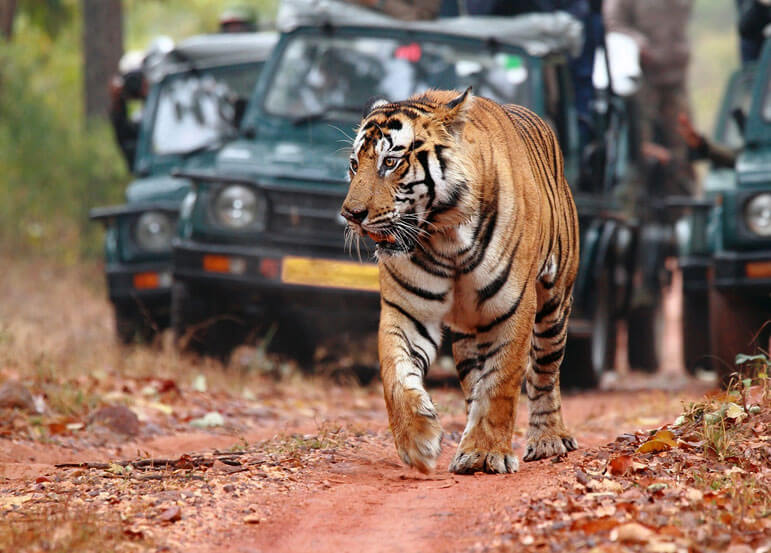
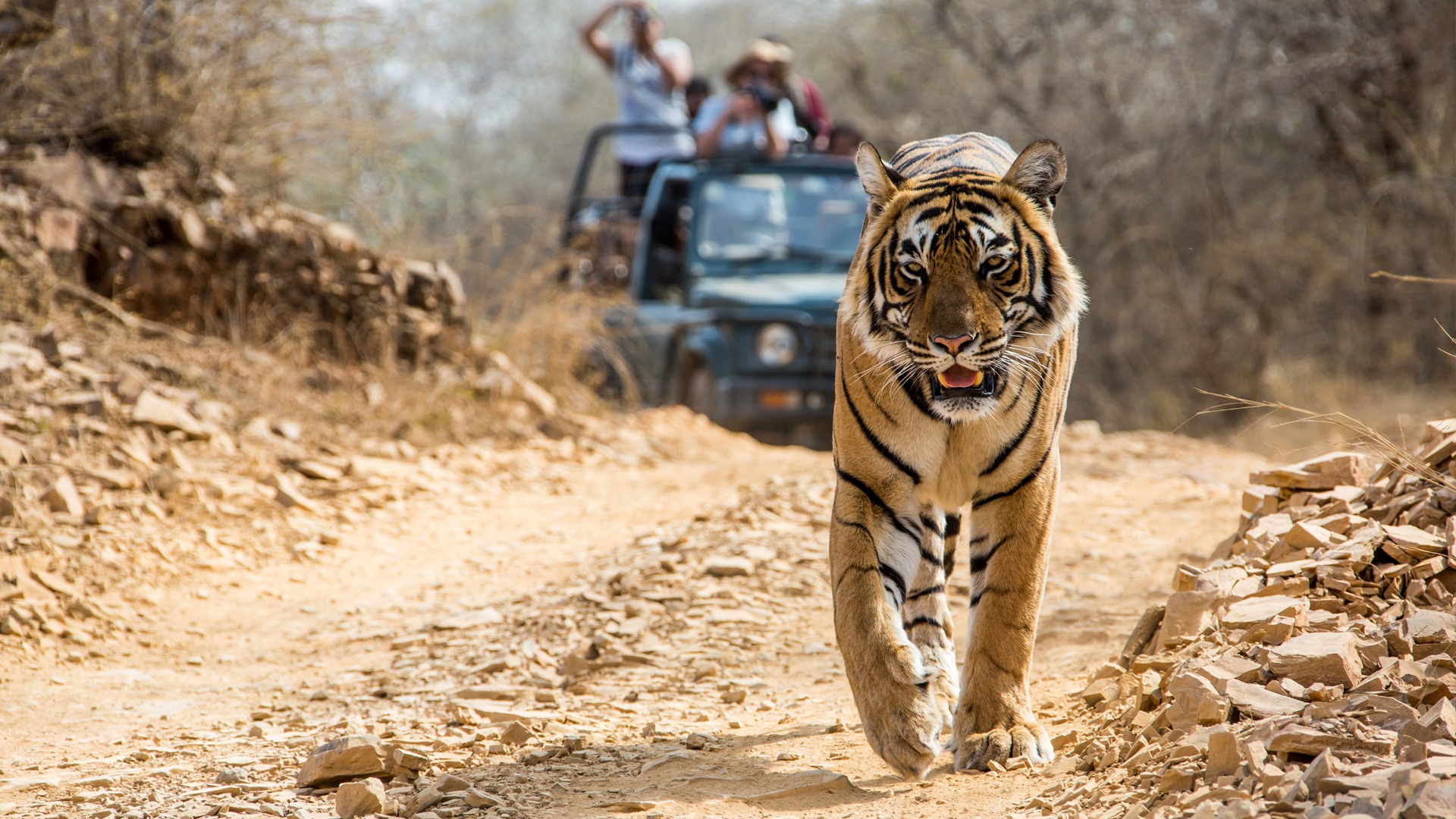
Ranthambore, in Rajasthan, is the tiger park Americans usually visit first — and with good reason. It's a four-hour drive from Jaipur, sits right on the Golden Triangle circuit, and frames its tigers against the ruins of a 10th-century hilltop fort unlike any other park on Earth. Spread across 515 square miles of dry-deciduous forest and open lakes, Ranthambore's tigers have grown famously comfortable being photographed. Our Ranthambore wildlife packages include morning and afternoon jeep safaris (October–June), park permits, and stays at boutique lodges near the park gate.
Best for: first-time safari travelers, Golden Triangle add-ons, and photographers chasing the classic fort-and-tiger frame.
Bandhavgarh National Park — Highest Tiger Density in India
If your single goal is to see a tiger in the wild, Bandhavgarh gives you the best statistical odds on the planet. This compact Madhya Pradesh park packs roughly 80 tigers into 425 square miles of sal forest and bamboo — the highest density of any Indian reserve. Serious wildlife photographers and repeat safari travelers consistently pick Bandhavgarh over flashier parks. Our Bandhavgarh packages pair morning and afternoon jeep safaris with stays at premium jungle lodges, including Taj Safaris' flagship property.
Best for: travelers who want the highest possible chance of a tiger sighting, and photographers willing to do 4–6 drives.
Kanha National Park — The Real Jungle Book Forest
Rudyard Kipling never actually visited Kanha, but the sal-and-bamboo forests of this 750-square-mile Madhya Pradesh reserve are widely accepted as the setting that inspired The Jungle Book. It's the most scenic of India's tiger parks — open meadows, misty mornings, and the hard-ground barasingha swamp deer (a species Kanha saved from extinction). Tiger sightings are strong, and the park feels wilder and less-trafficked than Ranthambore. Our Kanha packages often pair it with neighboring Bandhavgarh for a week-long Central India tiger tour.
Best for: Jungle Book romantics, photographers who want varied landscapes, and travelers combining 2–3 parks.
Jim Corbett National Park — India's Oldest Wildlife Reserve
Founded in 1936 and named for the legendary tiger hunter turned conservationist, Jim Corbett is India's original national park and a five-hour drive from Delhi — the most convenient tiger safari for travelers short on time. Set against the Himalayan foothills, Corbett blends riverine grasslands, dense sal forest, and the Ramganga River, giving it the widest habitat variety of any Indian tiger park. You'll see elephants, gharials, and over 580 bird species alongside tigers. Our Corbett packages include jeep safaris in the famous Dhikala, Bijrani, and Jhirna zones.
Best for: Delhi-based short trips, bird watchers, and travelers who want mountains, rivers, and tigers in one park.
Kaziranga National Park — Home of the One-Horned Rhino
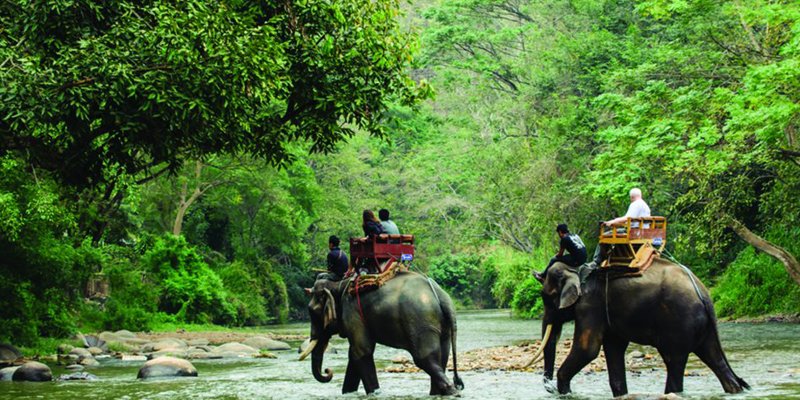
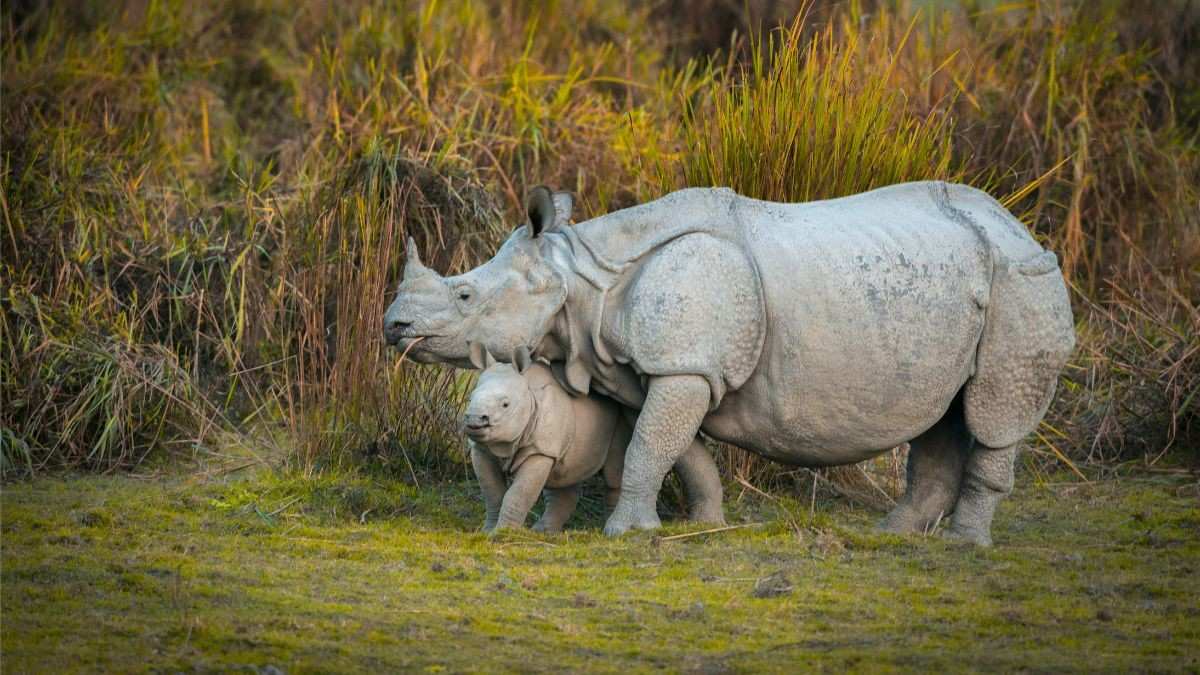
Kaziranga in Assam is a UNESCO World Heritage Site and the only place on Earth where you're almost guaranteed to see wild one-horned rhinoceros — the park protects over 2,600 of them, two-thirds of the global population. Beyond rhinos, Kaziranga hosts tigers (at very high density, though rarely seen), wild water buffalo, swamp deer, and elephants, all set across 430 square miles of alluvial grasslands flanking the Brahmaputra River. Jeep safaris and elephant-back safaris both run here. Our Kaziranga packages typically add 3–4 days to a Central India tour.
Best for: travelers who want to see all of India's iconic megafauna, not just tigers.
Pench Tiger Reserve — Where Mowgli's Story Began
If Kanha is The Jungle Book's scenery, Pench is its cast. Kipling set Mowgli's actual adventures in the Seoni hills that make up this Madhya Pradesh reserve, where teak forests, open savannah, and the Pench River shelter one of India's fastest-growing tiger populations. The park is quieter than Kanha or Bandhavgarh, the lodges are excellent, and leopard sightings are consistently strong. Our Pench packages pair easily with Kanha (3-hour drive) or Tadoba for a 10-day Central India wildlife deep-dive.
Best for: travelers who want fewer crowds, strong leopard odds, and a literary connection.
Gir National Park — The Only Place to See Asiatic Lions
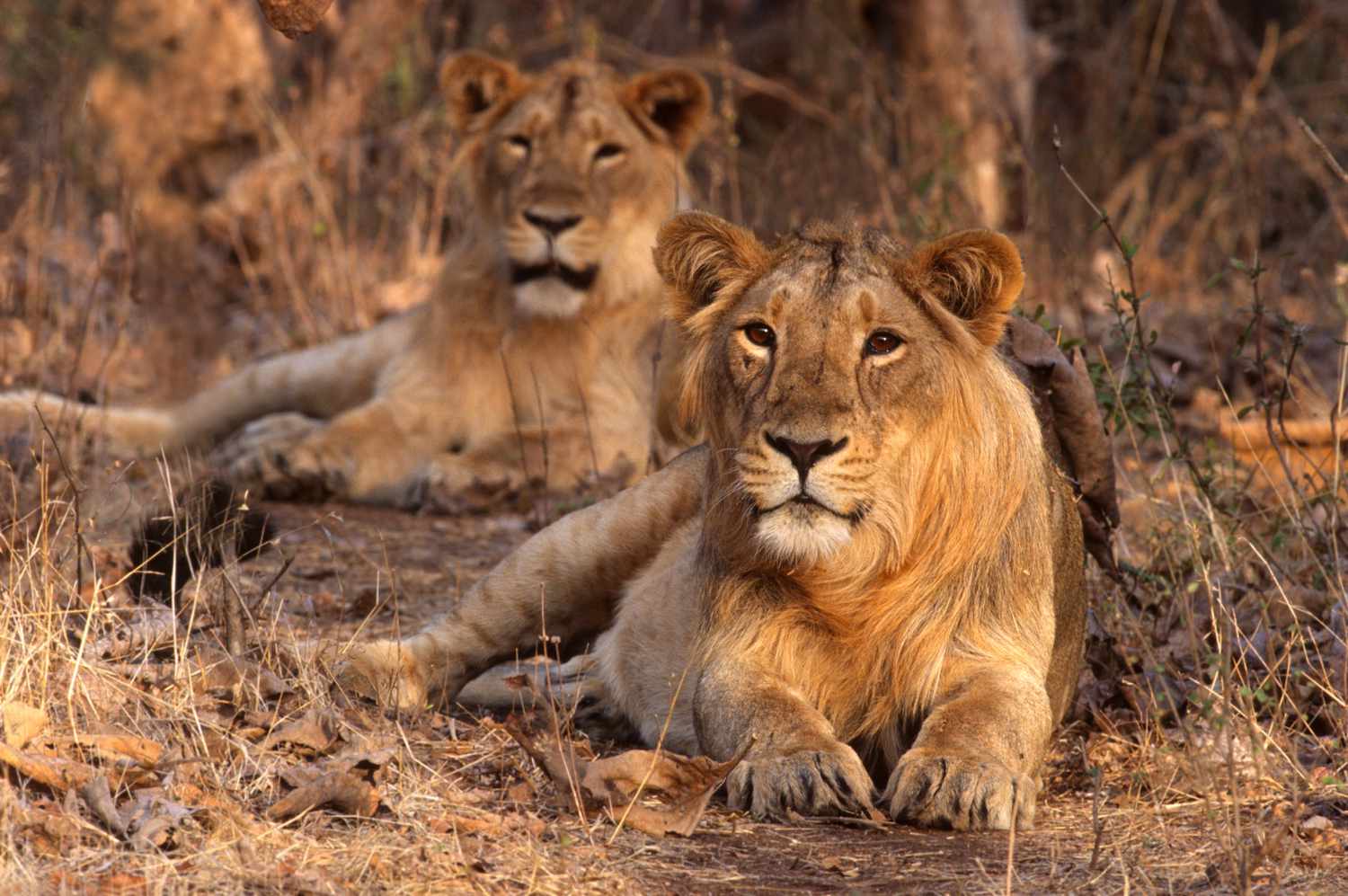
Gir, in Gujarat, is the last wild refuge of the Asiatic lion — slightly smaller than its African cousin, genetically distinct, and found nowhere else on the planet. Just over 670 lions roam this 450-square-mile forest, alongside leopards, hyenas, crocodiles, and hundreds of bird species. Sightings are reliable and the park feels noticeably different from India's tiger reserves — drier, more open, closer to what many Americans picture when they think 'safari.' Our Gir packages combine beautifully with Rajasthan heritage tours or Mumbai extensions.
Best for: bucket-list travelers, repeat India visitors, and anyone who wants to see a wild lion in Asia.
Types of Wildlife Tour Packages in India We Offer
No two wildlife travelers are alike — so our India safari packages come in five distinct formats, each built around a different travel style. Every format can be combined, extended, or customized.
Luxury Wildlife Tours in India
Premium jungle lodges (Taj Safaris, Oberoi Vanyavilas, &Beyond), private naturalists, in-room dining, and seamless transfers. Our luxury tiger safari India packages are built for travelers who want the wild without sacrificing comfort.
Private & Customized Wildlife Safaris
Private jeeps, private guides, and itineraries built entirely around your dates and interests. Ideal for couples, solo travelers, or anyone who doesn't want to share a safari vehicle with strangers.
Family Wildlife Tours in India
Kid-friendly lodges, flexible pacing, shorter drives, and activities beyond the jeep — elephant interactions, village visits, and nature walks. Our family wildlife packages work beautifully for multi-generational US families.
Wildlife + Golden Triangle Combined Tours
The most-booked package for first-time US visitors — pair Delhi, Agra (Taj Mahal), and Jaipur with a 2-night Ranthambore tiger safari. The classic India wildlife tour with Taj Mahal, done in 9–10 days.
Wildlife Photography Tours
Longer park stays, 4–6 safari drives per park, and specialist photography guides who know where to be at the right light. Designed for serious photographers chasing portfolio-quality tiger, leopard, and rhino images.
Best Time for an India Wildlife Safari
The short answer: October through June. Most Indian national parks close July through September for the monsoon, when heavy rain floods safari trails and animal visibility drops. Within the October–June window, there are two very different travel experiences.
November to February is India's winter — cool mornings (sometimes near freezing in Central India), pleasant 70°F days, and the most comfortable conditions for travelers unused to heat. Tiger sightings are good. Most first-time US visitors travel in this window.
March to May is when serious wildlife travelers book. Temperatures climb into the 90s and 100s, but the forests dry out, waterholes shrink, and animals concentrate around the remaining water — making sightings dramatically more frequent. This is peak photography season. Kaziranga follows a slightly different calendar (closed mid-April to October), and if snow leopards are on your list, Ladakh's Hemis National Park is best between January and March.
Quick reference:
|
Season |
Months |
Weather |
Tiger Sighting Odds |
Best For |
|
Winter (Peak Tourist) |
Nov – Feb |
Cool, 50–75°F |
Good |
First-timers, families, comfort seekers |
|
Summer (Best Sightings) |
Mar – May |
Hot, 85–110°F |
Excellent |
Photographers, serious safari-goers |
|
Pre-Monsoon |
June |
Very hot, humid |
Excellent but brief |
Experienced travelers |
|
Monsoon (Closed) |
Jul – Sep |
Heavy rain |
Parks mostly closed |
Kerala backwaters, Ladakh trekking |
|
Post-Monsoon |
October |
Lush, warm |
Fair |
Shoulder-season bargains |
How Much Does an India Wildlife Tour Cost? (USD Pricing)
Our India wildlife tour packages start at approximately USD $850 per person for a 5-day Ranthambore safari and go up to USD $5,500+ for a 14-day luxury multi-park tour. The final price depends on three things: how many parks you visit, how long your trip runs, and your accommodation tier (comfort, premium, or luxury).
Every package includes: park entry permits, morning and afternoon jeep safaris, park-certified naturalist guides, jungle lodge or hotel accommodation, breakfast and most meals, private air-conditioned transfers between destinations, and all applicable Indian taxes. Foreigner permit fees are roughly three times the domestic rate — we pay and include these in the package price so you never face a surprise fee at the park gate.
Not included: international flights from the US (plan USD $900–$1,500 round-trip from major American hubs), the India e-Visa (about USD $25), personal expenses, travel insurance, and customary tips for guides and drivers (USD $5–10 per person per day is standard).
Sample starting prices:
|
Package Type |
Duration |
Parks Covered |
Starting Price (USD / person) |
|
Ranthambore Quick Safari |
5 Days |
Ranthambore |
$850 |
|
Central India Tiger Tour |
7 Days |
Bandhavgarh + Kanha |
$1,600 |
|
Golden Triangle + Tiger Safari |
9 Days |
Delhi, Agra, Jaipur, Ranthambore |
$1,850 |
|
Classic Wildlife Tour |
10 Days |
Kanha + Bandhavgarh + Pench |
$2,400 |
|
Wildlife & Culture Grand Tour |
14 Days |
Multi-park + Taj Mahal + Varanasi |
$3,900 |
|
Luxury Tiger Safari |
10 Days |
Premium lodges (Taj Safaris tier) |
$5,500+ |
All prices are based on twin-share occupancy and can be finalized in USD, INR, or your preferred currency. Request a custom quote and we'll send a detailed, line-itemized itinerary within 24 hours.
Planning Your India Wildlife Tour from the USA
Four practical things American travelers ask us most before booking a wildlife trip to India.
Flights from the US to India
Direct flights run from New York (JFK/EWR), Newark, Chicago (ORD), San Francisco (SFO), and Washington DC (IAD) to Delhi (DEL) and Mumbai (BOM) on Air India, United, and Delta. Round-trip economy averages USD $900–$1,500 depending on season; premium economy and business run higher. We recommend flying into Delhi for all Central, North, and East India wildlife circuits.
India e-Visa for US Citizens
US passport holders qualify for the India e-Tourist Visa, available in 30-day, 1-year, and 5-year validity. Apply online at indianvisaonline.gov.in at least four days before travel — most applications are approved within 72 hours. The e-Visa costs roughly USD $25 for the 30-day version. No embassy visit required. We'll send you a step-by-step checklist when you book.
What to Pack for an Indian Safari
Neutral colors only (khaki, olive, soft grey — no bright colors or white), layered clothing for 40°F mornings and 90°F afternoons, sturdy closed-toe walking shoes, a wide-brim hat, strong sunscreen (SPF 50+), insect repellent with DEET, binoculars, and a telephoto lens (300mm minimum for tigers). Jungle lodges provide laundry, so pack light — 3–4 changes of safari clothes is plenty for a 10-day trip.
Is India Safe for American Travelers?
Yes. India's wildlife circuits — Rajasthan, Madhya Pradesh, Uttarakhand, Assam, and Gujarat — are among the safest regions of the country for international visitors. Every YoYo Trips itinerary includes private air-conditioned transfers with vetted drivers, accommodation at pre-inspected jungle lodges, and 24/7 phone support from our Delhi office during your trip. Solo female travelers, families with kids, and senior travelers all book our wildlife tours regularly.
Why Book Your India Wildlife Tour with YoYo Trips
We've spent years refining what works for American travelers visiting India's wildlife parks — and what doesn't. Here's what sets our packages apart.
- On-the-ground India expertise — Our Delhi-based team has direct relationships with park officials, lodge owners, and the best naturalist guides, giving our clients priority on permits, zones, and vehicles.
- Fully customizable itineraries — No rigid group departures. Every package is built around your dates, your pace, your budget, and the parks you most want to see.
- Transparent USD pricing — No currency surprises, no hidden fees. Park permits, guide fees, taxes, and foreigner surcharges are all included in one quoted price.
- Hand-picked jungle lodges — From mid-range eco-lodges to Taj Safaris, Oberoi Vanyavilas, and &Beyond — we've personally inspected every property we book.
- Expert naturalist guides — Our park-certified trackers know individual tigers by name and movement patterns, measurably improving your chance of a sighting.
- 24/7 support across US time zones — A real human answers our emergency line, even if it's midnight in Dallas or 3 a.m. in San Diego.
Browse our most-booked India wildlife tour packages below — each one is a starting point we'll customize around your travel dates, group size, and the parks you're most excited about. Can't find the exact combination you want? Share a few details using the enquiry form and one of our Delhi-based wildlife travel specialists will send you a fully personalized itinerary, with USD pricing, within 24 hours. No upfront fees, no pressure — just a thoughtful plan for your India safari.
Popular India Wildlife Packages






FAQs Related to Wildlife Packages in India
The best time for an India wildlife safari is October to June. Most national parks close July through September for the monsoon. For peak tiger sightings, travel between March and May — temperatures are hot (85–110°F) but animals concentrate at waterholes, making encounters dramatically more frequent. For more comfortable weather, November to February offers cool mornings and pleasant days, and is the most popular window for first-time American travelers and families.
An India tiger safari typically costs between USD $850 and $5,500+ per person, depending on duration, number of parks, and accommodation tier. A 5-day Ranthambore package starts around $850, a 10-day multi-park tour averages $2,400, and luxury tours with Taj Safaris-tier lodges begin at $5,500. Prices include park permits, jeep safaris, naturalist guides, jungle lodges, meals, and private transfers. International flights and the India e-Visa are not included.
Bandhavgarh National Park in Madhya Pradesh has the highest tiger density of any Indian reserve, making it statistically the best park for sightings. Ranthambore in Rajasthan comes second and is easier to reach from Delhi or Jaipur. For the strongest realistic odds, book 4–6 jeep safaris across 3 days in either park — no single safari can guarantee a tiger, but multiple drives push sighting probability above 85%.
Plan at least 7 days for a meaningful India wildlife tour, or 10–14 days to combine wildlife with culture. A 5-day trip covers one park (usually Ranthambore). A 7-day trip covers two parks (classic Bandhavgarh + Kanha). A 10-day trip adds a third park or the Golden Triangle. A 14-day grand tour combines three parks with the Taj Mahal, Jaipur, and often Varanasi or Kaziranga.
Yes — it's our most-booked itinerary for first-time American visitors. The standard 9-day Golden Triangle plus Ranthambore route runs Delhi → Agra (Taj Mahal) → Jaipur → Ranthambore National Park → Delhi. You'll experience India's top cultural sites and a 2-night tiger safari in one trip. Longer 12–14 day versions add Kanha or Bandhavgarh for deeper wildlife time.
Yes. India's wildlife circuits are among the safest regions of the country for international visitors. Every YoYo Trips itinerary includes private air-conditioned transfers with vetted drivers, stays at pre-inspected jungle lodges, and 24/7 phone support from our Delhi office throughout your trip. Solo female travelers, families with children, and senior US travelers book our wildlife tours regularly without incident.
Yes, US passport holders need an India visa — but it's simple. Apply online for the India e-Tourist Visa at indianvisaonline.gov.in at least four days before travel. It's available in 30-day, 1-year, and 5-year versions. The 30-day e-Visa costs roughly USD $25 and most applications are approved within 72 hours. No embassy visit required. We send all our clients a detailed e-Visa checklist after booking.
Every package includes park entry permits and foreigner fees, morning and afternoon jeep safaris, park-certified naturalist guides, jungle lodge or hotel accommodation, breakfast and most meals, private air-conditioned transfers between destinations, airport pickups and drop-offs, and all applicable Indian taxes. Not included: international flights, the India e-Visa, personal expenses, travel insurance, and tips for guides and drivers.
No — and any operator who guarantees a tiger sighting isn't being honest. Tigers are wild animals in vast forests. What we can do is maximize your odds: book you into the highest-density parks (Bandhavgarh, Ranthambore), the right safari zones, the right times of year, and enough drives (ideally 4–6 across 2–3 days per park) that sighting probability climbs above 85%. Most of our guests see tigers. Some see three or four on a single trip.
Share your travel dates, group size, and preferred parks using the enquiry form — we'll send a custom itinerary with USD pricing within 24 hours. Once you approve, we collect a 25% deposit to confirm park permits and lodges; the balance is due 30 days before travel. Cancellations more than 60 days out are fully refundable minus a small admin fee. Specific park permits (especially Ranthambore's peak zones) may carry separate cancellation rules — we'll walk you through the details before you pay.
Your Travel Journey Starts Here