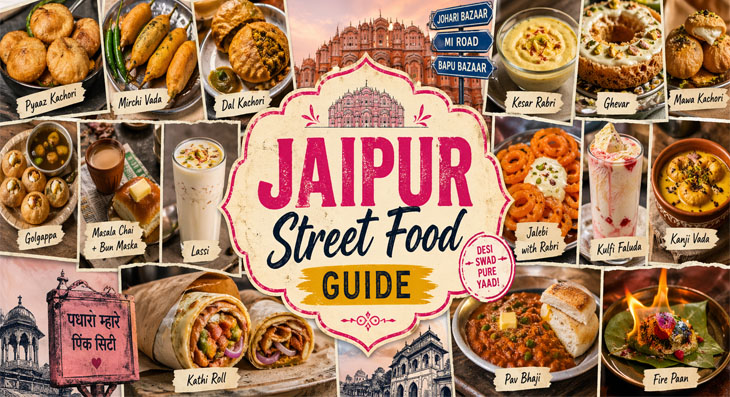
Jaipur’s street food scene is concentrated in four main areas — Johari Bazaar, Tripolia Bazaar, Chandpole Bazaar, and MI Road — plus the organised Masala Chowk food court near Albert Hall Museum. The 15 most iconic dishes range from Pyaaz Kachori at the legendary Rawat Misthan Bhandar to cream-thick lassi at Lassiwala’s 80-year-old MI Road stall. This guide lists each dish with the exact stall, full address, opening hours, and current 2026 prices — the information travelers actually need to eat well in the Pink City.
Quick answers for Jaipur street food
- Most famous street food in Jaipur: Pyaaz Kachori (deep-fried pastry with spiced onion filling)
- Best street food area for first-timers: Masala Chowk (organised, hygienic, one entry fee)
- Best street food area for authenticity: Johari Bazaar and Chandpole Bazaar (walled city)
- Average meal cost: ₹150–400 per person for a 3–4 dish sampler
- Vegetarian share: Roughly 90% of Jaipur’s iconic street dishes are vegetarian
- Best time to visit: October to March, between 5–9 AM or 5–10 PM
Why Jaipur is one of India’s top street food cities
Jaipur’s street food is the product of three traditions colliding in one walled city. The Marwari merchant community built a sweets-and-snacks culture where nearly every shop sells both namkeen (savoury) and mithai (sweet) side by side — which is why places like Rawat Misthan Bhandar are famous for kachoris and sweets. The royal Rajput kitchens contributed the fried, ghee-rich cooking style. And the Thar Desert’s agricultural constraints made gram flour, lentils, and dairy the backbone of snacking — not fresh vegetables.
What makes Jaipur especially rewarding for food travelers is geography. Most of the legendary stalls are clustered within a 2-km radius inside the walled city, meaning you can sample 8–10 iconic dishes on foot in a single afternoon. Unlike Mumbai or Delhi, where street food is scattered across sprawling neighbourhoods, Jaipur’s old city is genuinely walkable.
Rajasthan is also one of India’s most vegetarian states, with roughly 74% of the population being vegetarian — so the overwhelming majority of celebrated dishes are meat-free. Non-vegetarian street food exists but is concentrated in specific areas like MI Road and Raja Park.
Jaipur street food at a glance: all 15 dishes
| # | Dish | Best stall | Area | Price (₹) | Type |
|---|---|---|---|---|---|
| 1 | Pyaaz Kachori | Rawat Misthan Bhandar | Station Road | 40–45 | Veg |
| 2 | Mirchi Vada | Samrat Restaurant | MI Road | 30–50 | Veg (very spicy) |
| 3 | Dal Kachori | Khunteta Kachori | Kishanpol Bazaar | 10–20 | Veg |
| 4 | Golgappa | Chawla’s / Nand | Fashion Street | 40–60 | Veg |
| 5 | Masala Chai + Bun Maska | Sahu Chai / Gulab Ji | Chaura Rasta / Ganpati Plaza | 70–80 | Veg |
| 6 | Lassi | Lassiwala | MI Road | 60–80 | Veg |
| 7 | Kesar Rabri | Mahaveer Rabri Bhandar | Chandpole Bazaar | 450–500/kg | Veg |
| 8 | Ghevar | LMB / Rawat Misthan Bhandar | Johari Bazaar | 1200–1300/Piece | Veg (sweet) |
| 9 | Mawa Kachori | Rawat Misthan Bhandar | Station Road | 40–80 | Veg (sweet) |
| 10 | Jalebi with Rabri | Saras Parlour / LMB | Malviya Nagar / Johari Bazaar | 60–120 | Veg (sweet) |
| 11 | Kulfi Faluda | Pandit Kulfi | Near Hawa Mahal | 30–60 | Veg |
| 12 | Kanji Vada | Kanji Vada Stall | Johari Bazaar | 20–30 | Veg (seasonal) |
| 13 | Kathi Roll | Al Bake | MI Road | 90–110 | Non-veg |
| 14 | Pav Bhaji | Pandit Pav Bhaji | Near Birla Mandir | 100–110 | Veg |
| 15 | Fire Paan | Murli Pan Bhandar | Tripolia Bazaar | 50–100 | Veg |
The 15 Must-Try Jaipur Street Foods (with exact locations)
1. Pyaaz Kachori — Jaipur’s signature street snack
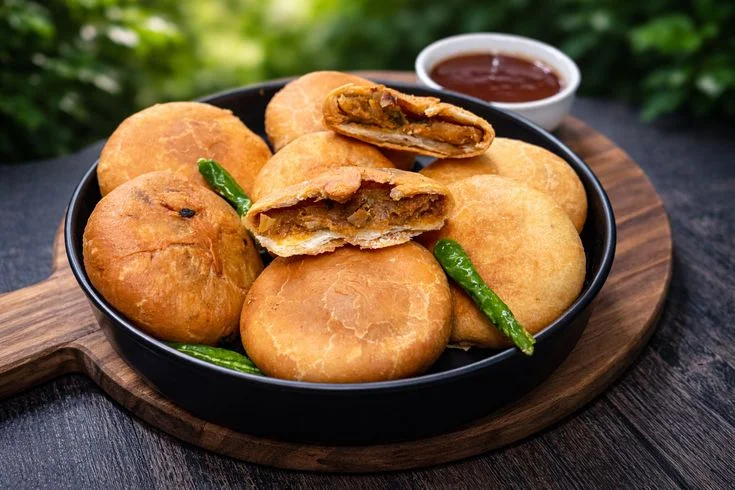
What it is: A deep-fried, flaky pastry stuffed with a punchy filling of spiced onions, fennel seeds, and green chillies. Served with sweet tamarind chutney and green mint chutney.
Taste profile: Crisp, savoury, mildly spiced, aromatic
Best stall: Rawat Misthan Bhandar, Station Road, Polo Victory (operational since 1955 and widely recognised as the definitive Pyaaz Kachori destination)
Backup option: Laxmi Misthan Bhandar (LMB), Johari Bazaar — a sit-down alternative with a full thali menu
Opening hours: 7:30 AM – 10:30 PM (daily)
Price: ₹30–50 per piece
Pro tip: Eat within 10 minutes of frying for peak crispness. Pair with a masala chai for the classic Jaipur breakfast combination. The shop gets chaotic between 8–10 AM — arrive at 7:30 AM or after 11 AM to avoid the rush.
2. Mirchi Vada — the spicy breakfast fritter locals swear by
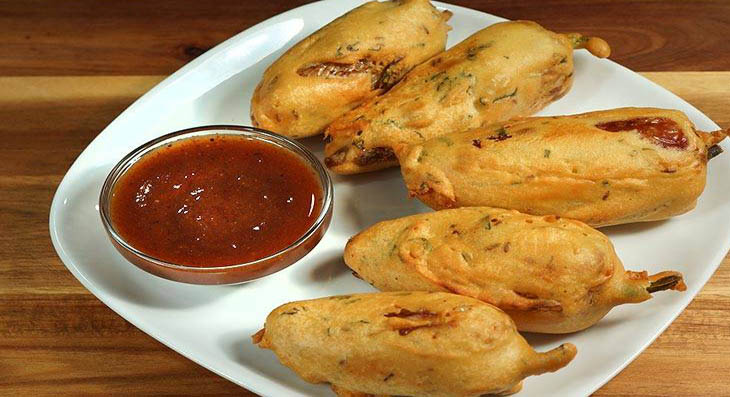
What it is: A large green chilli slit open, stuffed with spiced mashed potato, dipped in gram flour batter, and deep-fried golden.
Taste profile: Crisp exterior, soft potato interior, sharp chilli heat
Best stall: Samrat Restaurant, MI Road; also Sodhani Sweets, Tonk Road
Opening hours: 7:00 AM – 10:00 PM
Price: ₹25–40 per piece
Pro tip: Jodhpur claims Mirchi Bada as its own invention, but Jaipur’s version is milder and more beginner-friendly. Still, it’s genuinely hot — ask for “kum teekha” (less spicy) if you’re spice-sensitive. Best eaten with the sweet tamarind chutney, which balances the heat.
3. Dal Kachori — the walled city’s lesser-known speciality
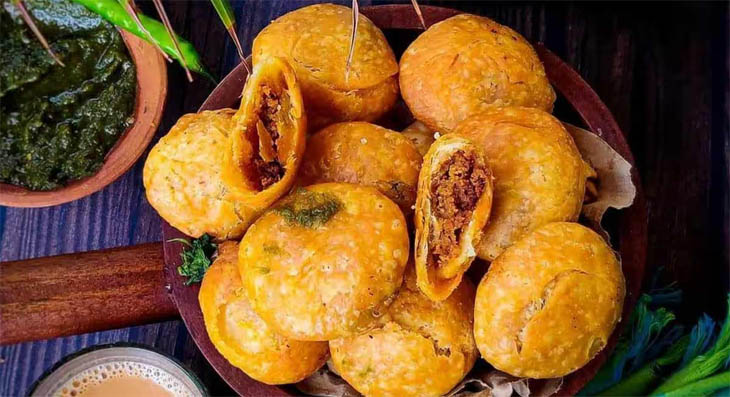
What it is: A smaller, crispier kachori stuffed with a spiced lentil (moong dal) filling. Less famous than Pyaaz Kachori but fiercely loved by Jaipur locals.
Taste profile: Intensely crisp, savoury, earthy
Best stalls: Khunteta Kachori, Kishanpol Bazaar (opposite Museum of Legacies); Karodia Kachori, Haldion Ka Rasta
Opening hours: 8:00 AM – 8:00 PM (approximate — old-city stalls vary)
Price: ₹20–35 per piece
Pro tip: Khunteta also serves a rare Aaloo Kachori that looks like a samosa in kachori shape — spicy even by Jaipur standards. Ask for it specifically; most travelers miss it.
4. Golgappa (Pani Puri) — the chaat showdown on Fashion Street
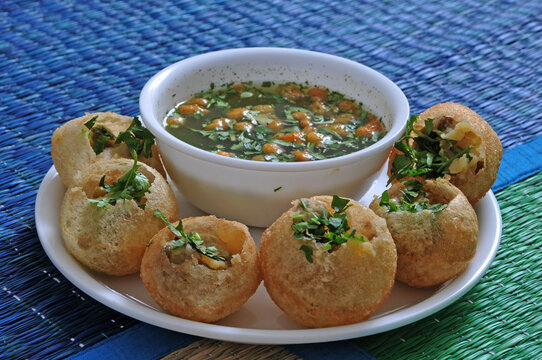
What it is: Crisp, hollow semolina puris filled with spiced potato, chickpeas, and tangy flavoured water.
Taste profile: Crunchy, tangy, spicy, cooling
Best stalls: Chawla’s Chat Corner and Nand Chat Bhandar — two competing stalls that face each other on Fashion Street (MI Road)
Opening hours: 11:00 AM – 10:00 PM
Price: ₹40–60 per plate (6–8 pieces)
Pro tip: Try both stalls back-to-back and form your own opinion — it’s a local tradition. Chawla’s is slightly tangier, Nand is slightly sweeter. Ask for the pani sampler to taste all the flavoured waters (pudina, imli, hing) before committing to one.
5. Masala Chai + Bun Maska — the perfect Jaipur breakfast
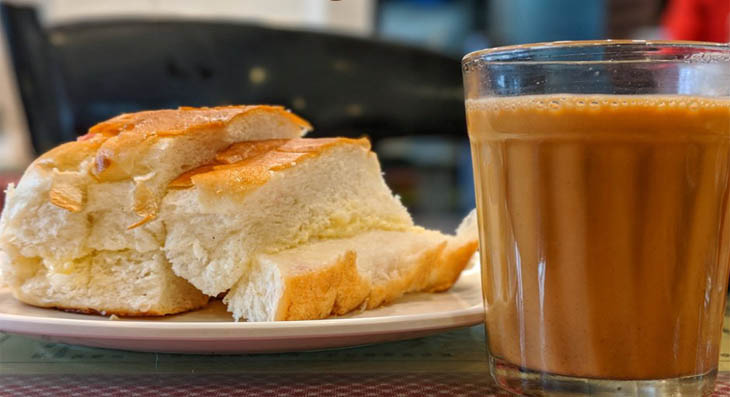
What it is: Strong, milky chai brewed with cardamom, ginger, and cloves, served with a lightly toasted bun slathered in butter.
Taste profile: Aromatic, creamy, comforting
Best stalls:
- Sahu Chai Stall (established 1968), Chaura Rasta — famous for tea brewed on coal, which adds a subtle smoky note
- Gulab Ji Chai Wale, Ganpati Plaza — the most iconic chai-and-bun-maska destination in Jaipur
Opening hours: Sahu: 6:30 AM – 9:00 PM. Gulab Ji: 7:00 AM – 6:00 PM (closes early — arrive before 5 PM)
Price: Chai ₹15–25, bun maska ₹30–50, bun samosa ₹40–60
Pro tip: Gulab Ji’s bun samosa (a samosa stuffed into a buttered bun) is a Jaipur-only item rarely found elsewhere. It sells out by late afternoon.
6. Lassi at Lassiwala — MI Road’s 80-year institution
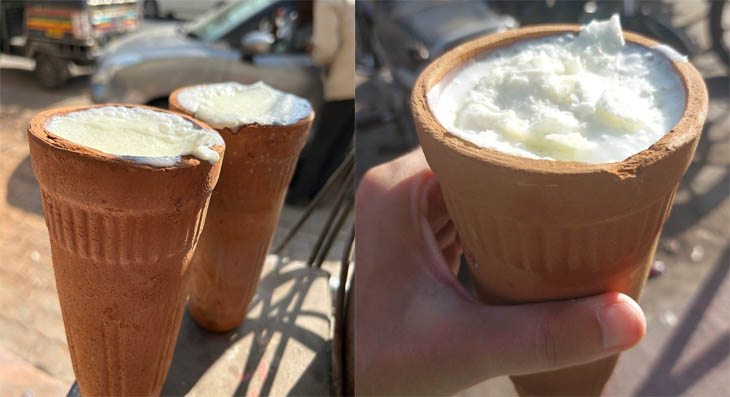
What it is: Thick, creamy yogurt drink served in an unglazed earthen kulhad (clay cup). Topped with a generous layer of malai (cream).
Taste profile: Rich, slightly sour, cooling, earthy from the clay
Best stall: Shri Mishrilal Lassiwala, MI Road (opposite Niro’s restaurant)
Critical warning: Multiple imitators operate side-by-side with nearly identical names. The authentic shop is labelled “Shri Mishrilal Hotel” and is usually the one with the longest queue. Check for this exact signage before ordering.
Opening hours: 7:30 AM – until stock runs out (usually by noon or early afternoon)
Price: ₹50–80 per kulhad (small or large)
Pro tip: Go early — by 11 AM on weekends, the original shop frequently sells out. The clay kulhad is disposable but heavy; hold it from the base, not the rim.
7. Kesar Rabri at Mahaveer Rabri Bhandar
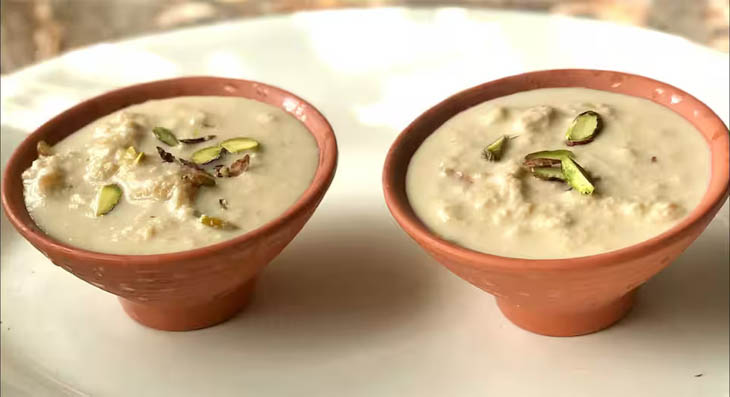
What it is: Thick, slow-simmered sweetened milk reduced to a dense, fudge-like consistency, flavoured with saffron and cardamom, garnished with slivered almonds and pistachios.
Taste profile: Intensely creamy, floral, sweet without being cloying
Best stall: Mahaveer Rabri Bhandar, Chandpole Bazaar (the original outlet — several newer branches exist across the city)
Opening hours: 8:00 AM – 10:00 PM
Price: ₹80–120 per serving
Pro tip: The shop also sells a local thali with Bejar Roti, garlic chutney, and Mirchi Ke Tipore that most tourists miss entirely. It’s one of the most authentic rustic meals you can eat in Jaipur.
8. Ghevar — Jaipur’s iconic festival sweet
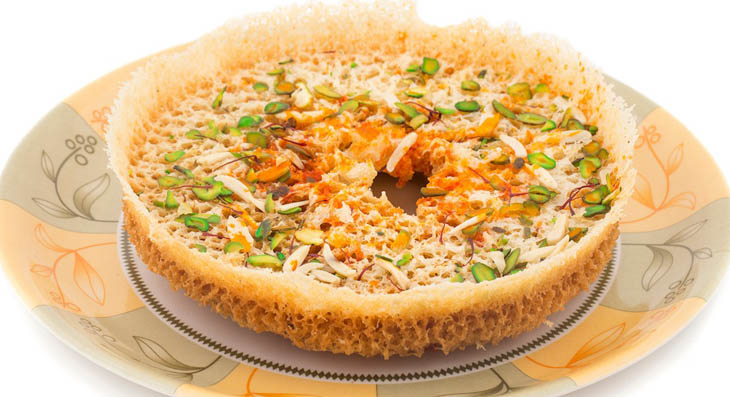
What it is: A disc-shaped, honeycomb-textured sweet made by pouring thin batter into hot ghee, then soaked in sugar syrup and topped with rabri, saffron, and nuts.
Taste profile: Crisp lattice, syrupy, creamy, floral
Best stalls: Laxmi Misthan Bhandar (LMB), Johari Bazaar; Rawat Misthan Bhandar, Station Road
Opening hours: 7:30 AM – 10:30 PM
Price: Plain Ghevar ₹300–400/kg; Mawa Ghevar ₹500–700/kg; Paneer Ghevar ₹600–800/kg
Seasonal note: Peak season is July–August (during the Teej festival), when stalls across Jaipur sell fresh Ghevar. Available year-round at established shops but freshest in monsoon.
Pro tip: Buy individual pieces rather than a full box — ₹50–100 per piece — so you can taste multiple varieties (Plain, Mawa, Malai, Paneer).
9. Mawa Kachori — the sweet Jodhpur-origin kachori
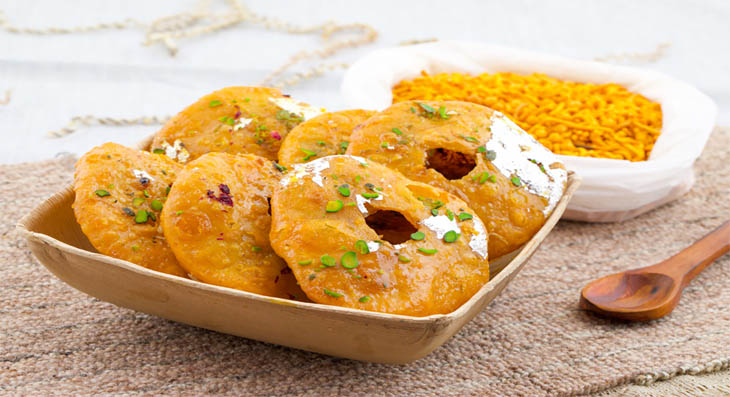
What it is: A deep-fried pastry stuffed with mawa (dried whole milk), chopped nuts, and cardamom, then soaked in rose-scented sugar syrup.
Taste profile: Crisp outside, soft nutty interior, sweet and floral
Best stall: Rawat Misthan Bhandar, Station Road
Opening hours: 7:30 AM – 10:30 PM
Price: ₹50–80 per piece
Pro tip: Though originally from Jodhpur (where Mishrilal Hotel is the gold standard), Rawat’s version is genuinely excellent and far more accessible if your Jaipur itinerary doesn’t include Jodhpur. Eat warm — within minutes of preparation, if possible.
10. Jalebi with Rabri — Jaipur’s weekend breakfast ritual
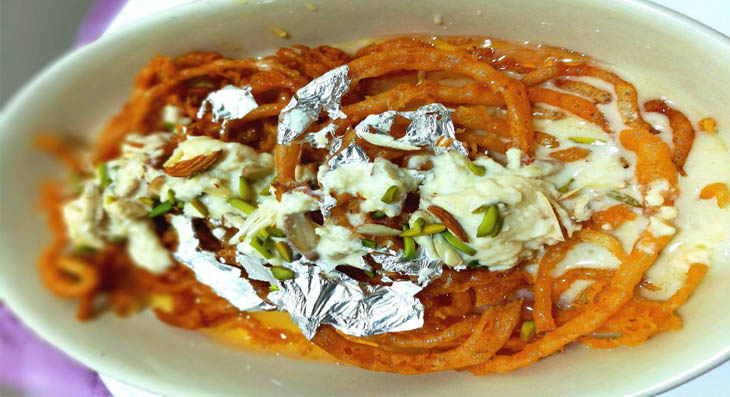
What it is: Crispy, pretzel-shaped deep-fried flour rings soaked in sugar syrup, served warm with thick cold rabri poured on top.
Taste profile: Crunchy, intensely sweet, cooling contrast from the rabri
Best stalls: Saras Parlour, Malviya Nagar; Laxmi Misthan Bhandar, Johari Bazaar
Opening hours: 7:00 AM – 10:00 PM
Price: Jalebi ₹250–350/kg; Jalebi with rabri serving ₹60–120
Pro tip: The temperature contrast is the whole point — insist on hot jalebi from the fryer and cold rabri from the fridge. If the jalebi isn’t fresh-fried, move to the next shop. This is a dish that does not keep.
11. Kulfi Faluda at Pandit Kulfi
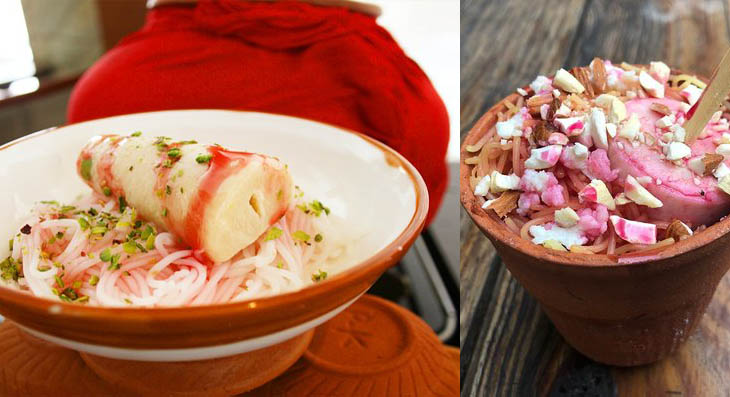
What it is: Dense, slow-churned Indian ice cream (kulfi) served with faluda (vermicelli-like noodles) and rose syrup.
Taste profile: Rich, creamy, floral
Best stall: Pandit Kulfi, near Hawa Mahal, walled city
Opening hours: 12:00 PM – 11:00 PM (peak hours: 4–9 PM)
Price: ₹50–100 per serving
Signature flavours: Pan (betel leaf) and Badaam (almond) — both iconic. The Pan kulfi is unusual, grassy-sweet, and worth trying at least once.
Pro tip: Avoid peak summer afternoons when the line stretches long. Early evening is ideal.
12. Kanji Vada — the fermented winter specialty
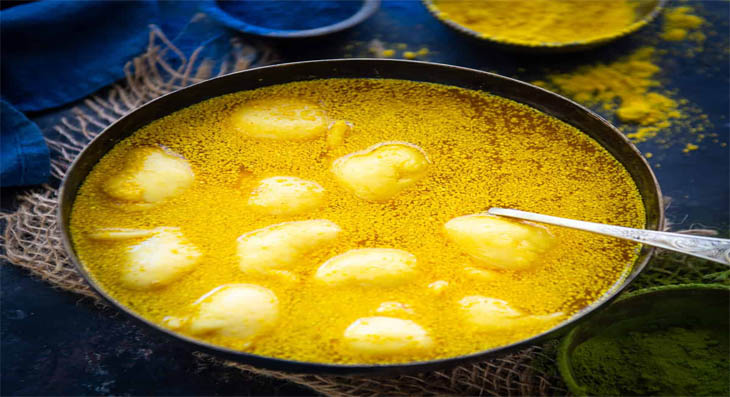
What it is: Lentil fritters (vadas) soaked in fermented mustard-seed water, served cold with chopped ginger and green chilli.
Taste profile: Tangy, fermented, pungent, slightly sour
Best stall: Kanji Vada Stall, Johari Bazaar (a 35-year-old institution)
Opening hours: 10:00 AM – 8:00 PM (seasonal — mostly October to February)
Price: ₹30–50 per plate
Pro tip: This is a polarising dish — the fermented mustard water is an acquired taste. It is also genuinely probiotic and considered a digestive tonic in traditional Rajasthani households. Try one plate before committing to more.
13. Kathi Rolls at Al Bake (“Chicken Paradise”)
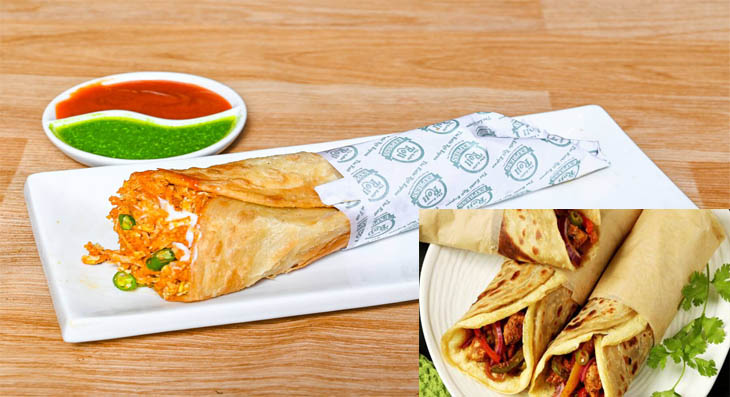
What it is: Paratha-wrapped rolls stuffed with spiced grilled chicken (or paneer), onions, and green chutney.
Taste profile: Savoury, smoky, spicy
Best stall: Al Bake, MI Road
Opening hours: 12:00 PM – 12:00 AM (midnight)
Price: Chicken Kathi Roll ₹150–250; Paneer Kathi Roll ₹120–180; Chicken Shawarma ₹150–200
Pro tip: One of the few reliable late-night street-food destinations in Jaipur. Also offers shawarma and a full chicken menu. The double-egg chicken roll is the crowd favourite.
14. Pav Bhaji at Pandit Pav Bhaji
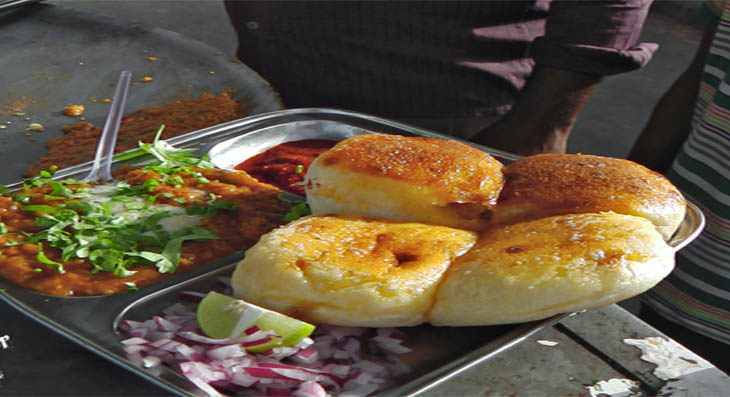
What it is: Buttery mashed vegetable curry served with toasted butter-soaked pav (bread rolls), diced onions, and lime.
Taste profile: Rich, spicy, buttery, tangy
Best stall: Pandit Pav Bhaji, near Birla Mandir (Moti Dungri)
Opening hours: 5:00 PM – 11:00 PM
Price: ₹80–150 per plate
Pro tip: Though Pav Bhaji is originally a Mumbai dish, Pandit’s Jaipur version is heavier on butter and spice — locals rate it among the best in North India. Ask for extra butter if you’re going all-in.
15. Fire Paan at Murli Pan Bhandar
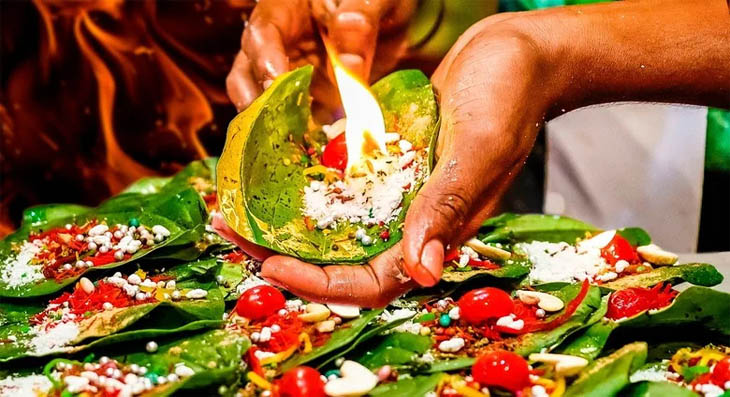
What it is: A traditional betel-leaf paan stuffed with sweet fillings (gulkand, fennel, coconut) and set alight for a few seconds before eating — a Jaipur-specific theatrical experience.
Taste profile: Sweet, aromatic, cooling, slightly smoky
Best stalls: Murli Pan Bhandar, Tripolia Bazaar; Annu Mobile Paan Bhandar (for 100+ paan varieties)
Opening hours: 11:00 AM – 11:00 PM
Price: Regular paan ₹50–80; Fire paan ₹100–150; Chocolate/ice paan ₹150–300
Pro tip: The fire is a showy ritual — the paan is extinguished in your mouth in under a second and is not actually painful. Don’t inhale while it’s burning. Ideal as a digestive after a heavy street food meal.
Best street food areas in Jaipur: neighbourhood-by-neighbourhood
Johari Bazaar — the traditional heart of Jaipur street food
Best for: Pyaaz Kachori, Ghevar, Jalebi, traditional sweets Star stall: Laxmi Misthan Bhandar (LMB) Walking distance to: Hawa Mahal (200 m), City Palace (500 m) Best time: Evening, 5:00–9:00 PM Character: Touristy but authentic — the iconic bazaar where most first-time food walks begin.
Tripolia Bazaar & Chandpole Bazaar — walled-city classics
Best for: Kesar Rabri, Fire Paan, old halwais, lesser-known kachoris Star stalls: Mahaveer Rabri Bhandar, Murli Pan Bhandar, Khunteta Kachori Best time: Morning, 8:00–11:00 AM Character: Less touristy than Johari, more local. A self-guided walking route of ~1.5 km covers 8+ legendary stalls.
MI Road — the modern street food corridor
Best for: Lassi (Lassiwala), chai (Gulab Ji), Kathi Rolls (Al Bake), Golgappa (Chawla’s/Nand), late-night eats Character: A wide main road with famous stalls at regular intervals. The best area in Jaipur for non-vegetarian street food. Best time: All day; Al Bake runs until midnight.
Masala Chowk — the organised food court for first-timers
Location: Ram Niwas Bagh, near Albert Hall Museum Entry fee: ₹13 per person Opening hours: 11:00 AM – 11:00 PM Best for: Travelers nervous about outdoor-stall hygiene, families, large groups Character: Over a dozen Jaipur street food stalls under one roof, including branches of several famous names. Self-service with clean seating, fans, and hand-washing facilities. An ideal 90-minute introduction to Jaipur street food before you venture into the bazaars.
Bapu Bazaar & Fashion Street — Chaat Central
Best for: Golgappa, Aloo Tikki, chaat varieties, light snacks during shopping Star stalls: Chawla’s, Nand Character: A shopping-and-eating mashup — eat between fabric and handicraft purchases.
Raja Park & C-Scheme — where locals actually eat
Best for: Non-vegetarian street food — chicken tikka, kebabs, rolls Star stall: Sethi Bar-Be-Que (Raja Park) — popular enough that regulars eat in their parked cars. Character: Residential-commercial mix, less touristy, catering primarily to middle-class Jaipur locals.
Suggested Jaipur street food walking routes
Walled City Classic Walk (~2 hours, ~2 km)
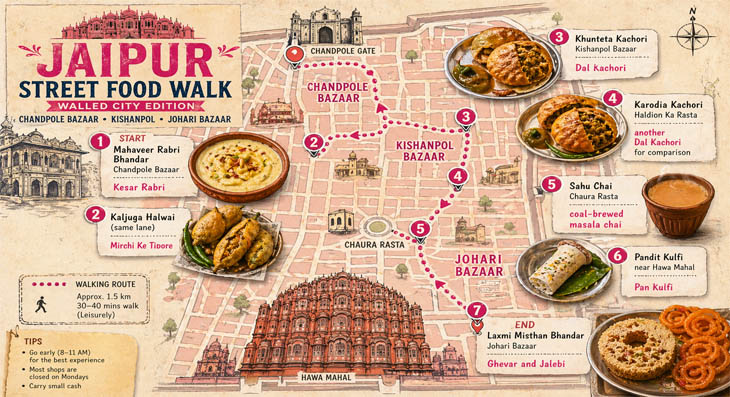
A self-guided route through the old city covering seven iconic stops:
- Start: Mahaveer Rabri Bhandar, Chandpole Bazaar — Kesar Rabri
- Walk to Kaljuga Halwai (same lane) — Mirchi Ke Tipore
- Khunteta Kachori, Kishanpol Bazaar — Dal Kachori
- Karodia Kachori, Haldion Ka Rasta — another Dal Kachori for comparison
- Sahu Chai, Chaura Rasta — coal-brewed masala chai
- Pandit Kulfi, near Hawa Mahal — Pan Kulfi
- End: Laxmi Misthan Bhandar, Johari Bazaar — Ghevar and Jalebi
Total suggested spend: ₹600–900 per person Ideal time: 8:30 AM start (breakfast route) or 4:00 PM start (evening route)
MI Road Icons Walk (~1.5 hours, ~1.5 km)
A non-walled-city alternative focused on modern Jaipur classics:
- Start: Gulab Ji Chai Wale, Ganpati Plaza — Masala chai and bun samosa
- Rawat Misthan Bhandar, Station Road (short detour) — Pyaaz Kachori and Mawa Kachori
- Shri Mishrilal Lassiwala, MI Road — Malai Lassi
- Chawla’s + Nand Chat Bhandar, Fashion Street — Golgappa showdown
- Samrat Restaurant, MI Road — Mirchi Vada
- End: Al Bake, MI Road — Kathi Roll (evening only)
Total suggested spend: ₹500–800 per person Ideal time: 9:00 AM start (breakfast-focused) or 6:00 PM start (dinner-focused)
Is Jaipur street food safe? (honest hygiene guide)
Jaipur street food is generally safe if you follow a few sensible rules. The risks are real but manageable — most issues arise from water rather than food itself.
- Stick to stalls with high turnover. A constant stream of customers means the food is fresh and the oil is young. Avoid stalls where pre-cooked food sits out in open containers.
- Avoid pre-cut fruit and uncovered water-based chutneys, especially in summer months (April–June). Both can harbour bacteria in Jaipur’s heat.
- Masala Chowk is the safest introduction if you’re nervous — the court is vetted by municipal authorities, stalls are inspected, and the seating area is clean and covered.
- Carry bottled water and avoid ice in chilled drinks from street vendors. Stick to sealed bottles or branded chai/coffee.
- Eat cooked, freshly-fried items on your first day — kachoris, vadas, jalebis, and rolls are prepared hot and are low-risk. Save raw chaats and golgappas for day 2 or 3.
- Avoid dairy-heavy items in peak summer afternoons when spoilage risk is highest. Morning rabri and early-evening kulfi are fine; 3 PM street lassi in June is not.
When is the best time to eat street food in Jaipur?
Best months: October to March. Cooler weather (15–28°C) keeps ingredients fresh, and all stalls are fully operational.
Best time of day:
- Morning (7:30–10:30 AM): Kachoris, chai, lassi, jalebi. Freshest preparations, lightest crowds.
- Evening (5:00–9:00 PM): Chaats, pav bhaji, rolls, paan. The Pink City’s street food scene peaks at this hour.
- Late night (9:00 PM–12:00 AM): Al Bake and a handful of MI Road stalls stay open; options narrow significantly after 10 PM.
Avoid:
- Peak summer afternoons (April–June, 42°C+) — food safety risk rises and several stalls close during the hottest hours
- Heavy monsoon days (July–August) — outdoor stalls shut down; Masala Chowk and indoor shops remain open
- The 2:00–4:00 PM window year-round — many walled-city stalls close for a siesta
Jaipur street food budget — realistic daily spend
- Light sampler (3–4 dishes): ₹200–350 per person
- Full food walk (6–8 dishes across 2 hours): ₹500–900 per person
- Family of 4, half-day food tour: ₹1,500–2,500 total
- Guided food walk with a local expert: ₹1,500–3,000 per person (includes all food)
Jaipur street food is genuinely affordable — even a generous food walk rarely exceeds ₹1,000 per person unless you’re also buying takeaway sweets to bring home.
Vegetarian, Jain, and dietary notes
Vegetarian travelers: Roughly 90% of the dishes in this guide are vegetarian. You will never struggle to eat well in Jaipur as a vegetarian.
Jain-friendly options (no onion, no garlic): Ghevar, Mawa Kachori, Jalebi, Lassi, Kulfi, Masala Chai. Dal Kachori and Pyaaz Kachori contain onion by default but several shops — including LMB and Rawat Misthan Bhandar — can prepare Jain versions on request with advance notice.
Non-vegetarian options: Limited mainly to MI Road (Al Bake for rolls and shawarma), Raja Park (Sethi Bar-Be-Que for tikkas), and select sit-down restaurants. Most walled-city stalls are strictly vegetarian.
Vegan travelers: Golgappa (check for dairy in some fillings), plain Masala Chai (request “kaali chai” or “black”), Mirchi Vada, and Pav Bhaji (request no butter). Most sweets use ghee or dairy and are not vegan. Jaipur is a challenging city for strict vegans — factor this into your planning.
Gluten-free: Very limited. Most street food is wheat-based. Kulfi, plain lassi, and some chaats are gluten-free but cross-contamination is common.
Frequently asked questions about Jaipur street food
What is the most famous street food in Jaipur?
Pyaaz Kachori — a deep-fried pastry stuffed with spiced onions — is Jaipur’s most iconic street food. The most famous version is served at Rawat Misthan Bhandar near the Jaipur railway station, which has been operational since 1955.
Where should a first-time visitor go for street food in Jaipur?
First-time visitors should start at Masala Chowk, an organised food court at Ram Niwas Bagh near Albert Hall Museum. The ₹13 entry fee covers access to over a dozen stalls representing Jaipur’s most famous food brands in a clean, seated environment. Once you’ve sampled the basics, graduate to the walled-city bazaars.
Is Jaipur street food too spicy for foreigners?
Jaipur street food ranges from mild to very spicy. Mirchi Vada and Lehsun Chutney are genuinely hot, but most iconic dishes — Pyaaz Kachori, Lassi, Kulfi, Ghevar, Jalebi — are approachable for all palates. Ask for “kum teekha” (less spicy) at any stall and vendors will adjust accordingly.
What are the opening hours of Rawat Misthan Bhandar?
Rawat Misthan Bhandar is open daily from approximately 7:30 AM to 10:30 PM. The peak rush is between 8:00 AM and 10:00 AM for breakfast and 6:00 PM to 9:00 PM for evening snacks. Arrive at 7:30 AM or around 11:00 AM to avoid queues.
How much does a Jaipur food walk cost?
A self-guided Jaipur food walk covering 6–8 dishes costs ₹500–900 per person. Guided food walks with a local expert, typically lasting 3–4 hours, cost ₹1,500–3,000 per person including all food tastings.
Can I do a Jaipur street food tour in one day?
Yes. A single day is enough to cover 8–10 iconic dishes if you plan two separate walks — a morning walled-city route and an evening MI Road route — with a midday break. Trying all 15 dishes in this guide realistically requires two days.
Is Masala Chowk worth visiting?
Yes, particularly for first-time visitors, families, or anyone hesitant about outdoor-stall hygiene. Masala Chowk hosts branches of several famous Jaipur street food brands under one clean, seated roof. It is not as atmospheric as the walled-city bazaars but it is easier, safer, and more comfortable — and the food quality is genuinely high.
What should I avoid when eating street food in Jaipur?
Avoid unsealed water and ice, pre-cut fruit in summer, and stalls with visibly low customer turnover. Stick to freshly-fried items on your first day and save raw chaats or golgappas for later in your trip once your stomach has adjusted. Always carry a basic rehydration salt sachet as a precaution.
Are there non-vegetarian street food options in Jaipur?
Yes, but they are concentrated in specific areas. The best non-vegetarian street food is found on MI Road (Al Bake for Kathi Rolls and shawarma, open until midnight) and in Raja Park (Sethi Bar-Be-Que for chicken tikka). The walled-city bazaars are almost entirely vegetarian.
Is Lassiwala on MI Road really the original?
The original lassi shop is labelled “Shri Mishrilal Hotel” on MI Road, opposite Niro’s restaurant. Several imitators with nearly identical names operate adjacent to it, which frequently confuses tourists. Check the signage carefully and look for the shop with the longest queue — that is almost always the authentic original.
Book a Guided Jaipur Food Walk with YoYo Trips India
Want to enjoy Jaipur’s famous street food without worrying about where to go or which stalls to trust? Let the local experts at YoYo Trips India take care of the planning. Our carefully curated half-day and full-day Jaipur food walks are included in selected Rajasthan vacation packages with Indian food, giving you the chance to taste authentic local flavors while exploring the city’s rich culinary heritage.
Every food stop is personally vetted for hygiene, authenticity, and quality. Our licensed guides speak English, Hindi, and regional languages, and we keep group sizes small (2–8 travelers) to ensure a relaxed, personalized experience.
Ready to experience the real taste of Rajasthan? Talk to a Travel Expert today and let us help you plan a food-filled journey you’ll never forget.
✓ Customisable itineraries • ✓ Licensed local guides • ✓ Hygiene-vetted stalls • ✓ Best price guarantee
Final thoughts: eating your way through the Pink City
Jaipur’s street food is more than a list of dishes — it’s a record of how a merchant city, a royal court, and a desert culture converged in the lanes of the walled city and taught each other how to cook. A Pyaaz Kachori at Rawat, a rabri at Mahaveer, and a fire paan at Murli is not three snacks; it’s a small tour through 150 years of Jaipur’s culinary history.
Whether you’re planning a structured food walk or simply wandering the bazaars letting your appetite lead, the dishes in this guide will give you a genuine taste of the Pink City. Come hungry, carry cash in small denominations, eat early and often, and don’t skip the sweets.
You might also enjoy
- Famous Dishes of Rajasthan: A Traveller’s Complete Guide
- The Ultimate 10-Day Rajasthan Itinerary
- Best Month to Visit Rajasthan
- Rajasthan Festival Calendar: A Month-by-Month Guide

YoYo Trips India Editorial Team is a group of travel experts and content creators who publish well-researched guides, itineraries, and travel tips across India, helping travelers plan smooth and memorable trips.