Rajasthan, the Land of Kings, is famous worldwide for its magnificent forts, golden deserts, and vibrant festivals. But there is another dimension to this royal state that captivates every visitor just as powerfully — its food. Rajasthani cuisine is bold, aromatic, deeply historic, and unlike anything else in India.
Born out of necessity in an arid desert climate where water was scarce and fresh vegetables rarely available, the famous food of Rajasthan evolved to be extraordinarily clever — using dried pulses, gram flour, preserved berries, and generous amounts of ghee to create dishes that were both nourishing and shelf-stable. Over centuries, the royal courts of Jaipur, Jodhpur, Udaipur, and Bikaner added layers of opulence, and today Rajasthani cuisine spans everything from earthy street snacks to elaborate royal feasts.
Whether you are planning a trip to Rajasthan and wondering what to eat, or you are simply a food lover curious about one of India’s most celebrated regional cuisines, this guide covers 20 traditional Rajasthani dishes — what they taste like, how they are made, and exactly where to find the best versions across the state.
🍴 Planning a food trip to Rajasthan?
Experience Every Dish on This List — In Person
Our Rajasthan tour packages include curated food stops, heritage Thali dinners, and local market walks across Jaipur, Jodhpur, Udaipur & Jaisalmer.
View Rajasthan Tour Packages →✓ Customizable itineraries • ✓ Trusted since 2015 • ✓ Free consultation
Why Rajasthani food is unlike any other Indian cuisine
To truly appreciate the food of Rajasthan, it helps to understand the geography that shaped it. The Thar Desert covers over 60% of the state, making agriculture difficult and water scarce. Fresh green vegetables were a luxury, and food needed to last for days without refrigeration. This forced Rajasthani cooks to become extraordinarily inventive.
The result is a cuisine that relies heavily on dried lentils and pulses, gram flour (besan), pearl millet (bajra), dried desert berries, and preserved beans. Dairy — especially ghee, yogurt, and milk — plays a starring role, both as a cooking medium and as a flavor enhancer. Bold, warming spices like cumin, coriander, dried red chillies, asafoetida (hing), and ajwain (carom seeds) are used generously, serving both taste and preservation purposes.
At the other end of the spectrum, the royal kitchens of Rajasthan’s maharajas produced some of India’s most lavish food — game meat curries marinated overnight, saffron-perfumed sweets adorned with gold leaf, and elaborate thalis with 20+ rotating dishes. This dual heritage — desert resilience and royal opulence — is what makes Rajasthani cuisine so extraordinarily layered.
One more thing: Rajasthan is one of India’s most vegetarian-friendly states, with surveys suggesting over 74% of the population is vegetarian. The overwhelming majority of the state’s most beloved dishes are plant-based, which makes it a wonderful destination for vegetarian travelers.
1. Dal Baati Churma — Rajasthan’s most iconic dish
Vegetarian | Best for: lunch or dinner | Must-try in: Jaipur, Jodhpur, Udaipur
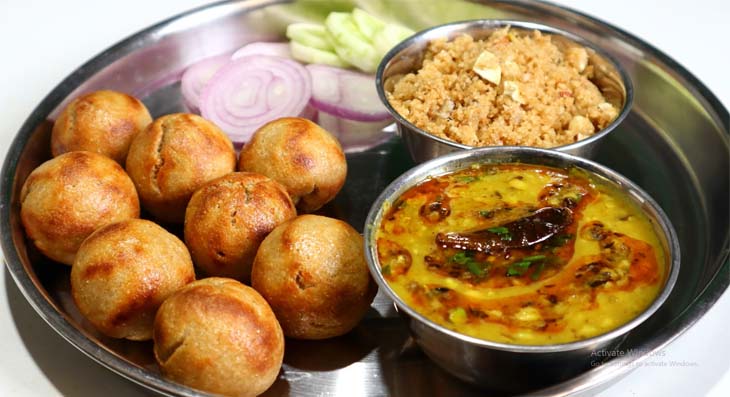
If there is one dish that defines Rajasthani cuisine, it is Dal Baati Churma. This legendary three-in-one meal is considered the heart and soul of Rajasthani cooking, served at every wedding, festival, and family gathering across the state.
The dish has three distinct components. Dal (also called Panchkuti Dal) is a rich, spiced curry made from five varieties of lentils — toor, chana, moong, urad, and masoor — slow-cooked with ghee, garlic, cumin, and turmeric. Baati are firm, round wheat flour dough balls baked in a clay oven (bhatthi) or over live charcoal until golden and slightly charred on the outside; they are then split open and dunked generously in melted ghee. Churma is the sweet counterpart — coarsely crushed baati mixed with jaggery or sugar and ghee, often garnished with almonds and cardamom.
The combination is a nutritional and culinary masterpiece: protein from the lentils, slow-burning carbohydrates from the baati, and healthy fats from the ghee and churma. Historically, Rajput warriors carried baati into battle because the hard wheat rounds could be cooked by burying them in hot desert sand.
Where to eat it: Chokhi Dhani (Jaipur) for a full cultural experience with folk performances; Kalyan Restaurant (Jodhpur) for a traditional rustic version; Ambrai Restaurant (Udaipur) for a scenic lake-view setting.
2. Laal Maas — the fiery red meat curry
Non-vegetarian | Best for: dinner | Must-try in: Jodhpur, Jaipur, Jaisalmer
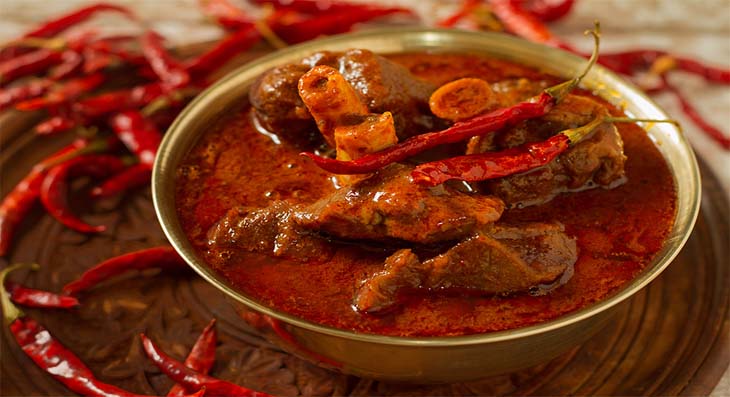
Laal Maas, which literally means “red meat,” is Rajasthan’s most celebrated non-vegetarian dish and one of the finest examples of the state’s bold, unapologetic approach to spice. Originally prepared with deer or wild boar meat in the royal hunting camps of the Rajput kings, it is today made with tender mutton (lamb).
What sets Laal Maas apart is the Mathania red chilli — a variety cultivated near Jodhpur that gives the dish its signature deep crimson colour, smoky heat, and complex flavour. The meat is slow-cooked in a gravy of yogurt, garlic, and whole spices, with the chillies providing an intensity that is less about raw heat and more about layered depth of flavour.
A proper Laal Maas is tender enough that the meat falls off the bone and the spiced gravy soaks into every fibre. It is best enjoyed with thick bajra roti or plain steamed rice to balance the heat.
Taste profile: Intensely spicy, smoky, deeply savoury — not for those sensitive to heat, but unforgettable for spice lovers.
Where to eat it: Gypsy Restaurant (Jaipur) — widely regarded as one of the best Laal Maas in the state; Indique (Jodhpur) — rooftop dining with fort views; Trio Restaurant (Jaisalmer) for an atmospheric desert evening.
3. Pyaz Ki Kachori — Jaipur’s beloved morning snack
Vegetarian | Best for: breakfast or evening snack | Must-try in: Jaipur
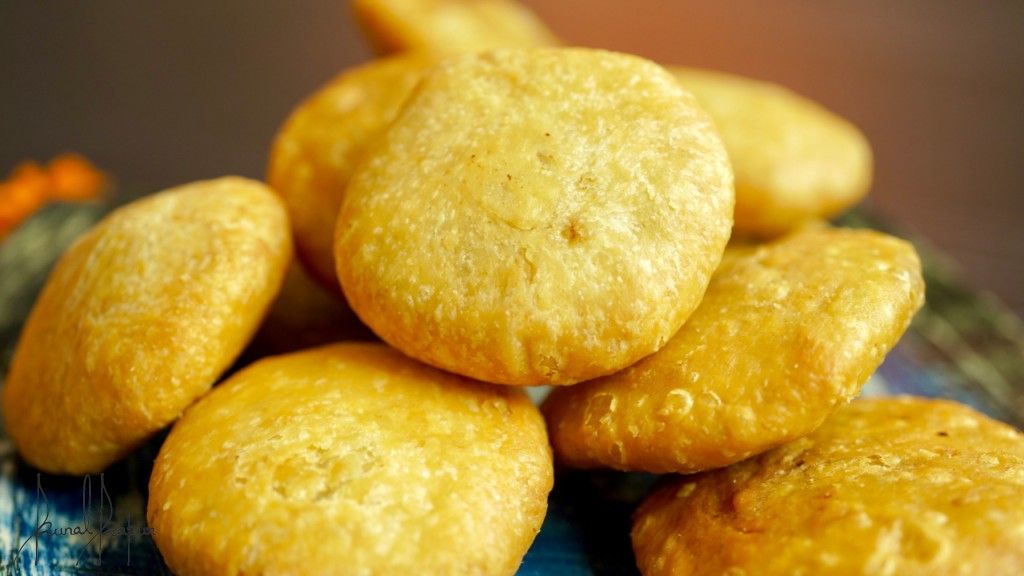
Pyaz Ki Kachori is Jaipur’s gift to Indian street food, and no visit to the Pink City is complete without one. These are deep-fried flaky pastries made from refined flour (maida), stuffed with a punchy filling of spiced onions, fennel seeds, coriander, and green chillies.
The hallmark of a great Pyaz Ki Kachori is the contrast between the shatteringly crisp outer shell and the soft, aromatic onion filling inside. They are served with two chutneys — a bright green mint-coriander chutney and a thick, sweet-sour tamarind sauce — which take the snack to another level entirely.
Originating from the Marwari culinary tradition, kachoris were originally created as long-lasting travel food (the fried shell preserves the filling for hours). Today they are enjoyed as a breakfast staple and teatime favourite throughout Rajasthan.
Variations to try: Mawa Kachori (sweet, stuffed with thickened milk and dry fruits — see item 12), Dal Kachori (lentil-stuffed, milder flavour).
Where to eat it: Rawat Misthan Bhandar (Jaipur) — the most famous kachori shop in the state, in operation since 1963; LMB Restaurant (Jaipur Old City) for a sit-down version with full thali accompaniment.
4. Mirchi Bada — Jodhpur’s fiery street icon
Vegetarian | Best for: breakfast or evening snack | Must-try in: Jodhpur
Mirchi Bada is Jodhpur’s most iconic street snack and a serious test for anyone who claims to love spicy food. Large, thick green chillies (mirchi) are slit open, stuffed with a filling of spiced mashed potato and sometimes paneer, then dipped in a seasoned gram flour (besan) batter and deep-fried until puffed and golden.
The result is a snack that is simultaneously crispy, soft, starchy, and ferociously hot — a combination that Jodhpur locals eat for breakfast with reckless enthusiasm. The spiced potato filling tempers the raw heat of the chilli slightly, but make no mistake: this is not a dish for those who shy away from chillies.
Taste profile: Crispy exterior, soft potato interior, sharp green-chilli heat balanced by cooling chutneys. Best paired with sweet tamarind chutney to balance the fire.
Where to eat it: Shahi Samosa (Jodhpur, near Sardar Market) — considered the definitive Mirchi Bada experience; Janta Sweet Home (Jodhpur) for freshly fried morning batches.
Explore: Planning a Rajasthan adventure? Read our Jaisalmer Desert Safari Guide.
5. Gatte Ki Sabzi — the vegetarian staple of every Rajasthani thali
Vegetarian | Best for: lunch or dinner | Available throughout Rajasthan
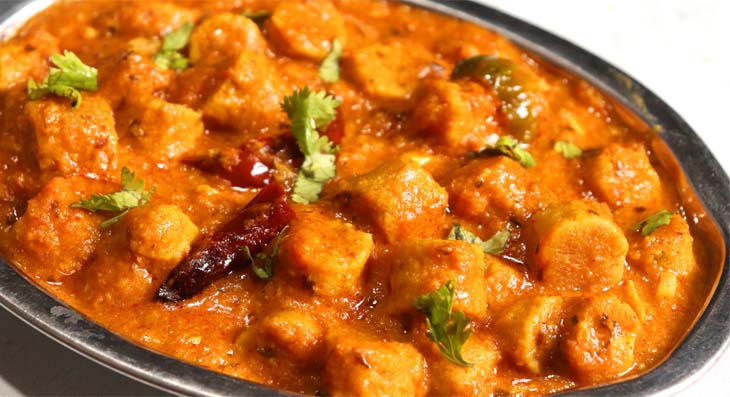
Gatte Ki Sabzi is a brilliant example of Rajasthani culinary creativity. In a region where fresh vegetables were once a luxury, cooks found a way to create a satisfying “vegetable” curry using gram flour (besan). Gatte are firm cylindrical dumplings made from besan mixed with yogurt and spices, rolled into logs, boiled, sliced into rounds, and then simmered in a spiced yogurt-based gravy.
The dumplings have a pleasantly firm, slightly chewy texture that absorbs the tangy, mildly spiced gravy beautifully. The curry itself is made from whisked yogurt tempered with cumin, mustard seeds, dried red chillies, and asafoetida — a combination that gives it both depth and a gentle sourness.
Gatte Ki Sabzi appears on virtually every Rajasthani thali, and there are multiple regional variations: Shahi Gatte (rich, cream-enriched), Masala Gatte (stuffed with spiced filling), and Gatte Ka Pulao (gatte cooked with fragrant rice as a festival dish).
Best paired with: Bajra roti or steamed rice, and a side of papad or pickles.
6. Ker Sangri — the Thar Desert’s unique pickle-vegetable
Vegetarian | Best for: as a side dish | Must-try in: Jodhpur, Barmer, desert regions
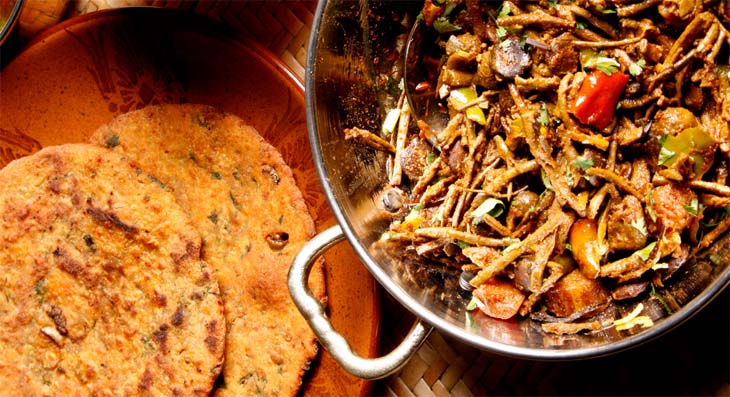
Ker Sangri is perhaps the most uniquely Rajasthani dish on this list — a combination of two ingredients that exist almost exclusively in the Thar Desert. Ker are small, slightly bitter wild berries that grow on desert shrubs. Sangri are the dried pods (beans) of the Khejri tree — Rajasthan’s state tree — known as the “tree of life” in the desert ecosystem.
Both ingredients are sun-dried for preservation, then rehydrated by soaking in water, and cooked together in a spiced preparation with mustard oil, dried red chillies, fennel seeds, amchur (dried mango powder), and coriander. The result is a tangy, slightly bitter, sweet-and-sour side dish that acts somewhat like a thick pickle or relish.
Ker Sangri was historically a food of survival — it could be stored for months and eaten without heating, making it perfect for desert communities and travelling armies. Today it is considered a delicacy and is served proudly at authentic Rajasthani restaurants and thali establishments.
Best paired with: Bajra roti (pearl millet flatbread) and thick yogurt — the classic rural Rajasthani pairing.
7. Kadhi — the spiced yogurt curry every household makes differently
Vegetarian | Best for: lunch | Available throughout Rajasthan
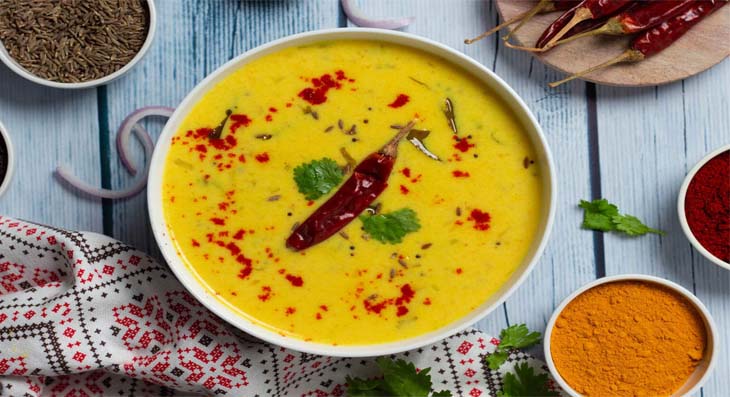
Rajasthani Kadhi is a tangy, spiced yogurt-based curry made by whisking together yogurt and gram flour, then bringing it to a simmer with a tempering of cumin seeds, mustard seeds, dried red chillies, curry leaves, and asafoetida. Unlike the thicker, sweeter Gujarati kadhi or the pakora-heavy Punjabi version, Rajasthani kadhi is thinner in consistency, tangier in flavour, and significantly more aromatic with its use of whole spices.
What makes it particularly special is that every Rajasthani family has its own closely guarded recipe, passed down through generations. Some add pakodas (gram flour fritters), others finish with a swirl of cream, and some versions include tiny pearl onions or drumstick vegetable for extra substance.
Kadhi is comfort food in its purest form — warming, satisfying, and deeply familiar. A bowl of kadhi with steamed rice or fresh bajra roti is a complete meal in itself.
8. Safed Maas — the royal white meat curry
Non-vegetarian | Best for: dinner at heritage hotels | Must-try in: Jaipur, Jodhpur, Udaipur
While Laal Maas gets most of the attention, Safed Maas (“white meat”) is arguably the more refined of Rajasthan’s two great meat curries. This dish comes directly from the royal kitchens of Rajasthan’s maharajas — a curry designed to showcase culinary elegance rather than raw power.
Safed Maas is a lamb or mutton curry made in a rich, creamy white gravy. The sauce is built from cashew paste, yogurt, cream, and aromatic whole spices — cardamom, white pepper, cinnamon, and cloves — with no tomatoes, turmeric, or red chillies used, which is what keeps the gravy a beautiful ivory white. The result is a curry that is mild, nutty, deeply aromatic, and luxuriously rich.
Taste profile: Mild heat, extremely rich and creamy, fragrant with cardamom and saffron — the perfect dish for anyone who wants to experience non-vegetarian Rajasthani food without the intensity of Laal Maas.
Where to eat it: Most heritage hotels in Jaipur and Jodhpur serve excellent Safed Maas. Spice Court (Jaipur) is particularly well regarded for its royal Rajasthani non-vegetarian menu.
9. Bikaneri Bhujia — the snack that conquered the world
Vegetarian | Best for: snacking | Must-try in: Bikaner (original source)
Bikaneri Bhujia is one of India’s most recognised food exports — thin, crispy, golden strands of seasoned gram flour and moth bean (a hardy legume native to the Thar) that snap between the teeth with a satisfying crunch. While bhujia is made across India, the Bikaner variety is considered the original and the best, with a flavour profile that no packaged version has ever fully replicated.
The secret lies in the mineral-rich water of Bikaner, the specific ratio of moth bean flour to besan, and the traditional slow frying technique in pure mustard oil. The resulting bhujia is less oily than its imitators, crisper, and far more aromatic.
Brands like Haldiram’s trace their roots directly to Bikaner, but eating fresh bhujia from a local Bikaner shop — still warm from the fryer — is an entirely different experience from anything you’ll find in a packet.
Where to buy it: Bikanervala (outlets across Bikaner) for fresh daily batches; the Kote Gate market area for traditional family-run bhujia makers.
10. Bajra Ki Raab — Rajasthan’s ancient warming drink-porridge
Vegetarian | Best for: winter mornings | Available in homes and traditional dhabas
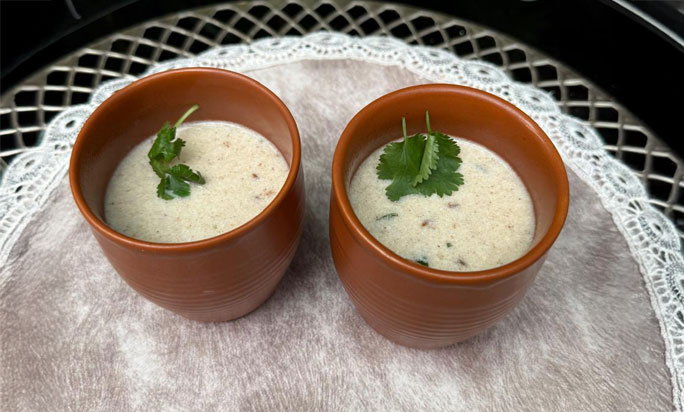
Bajra Ki Raab occupies an interesting category in Rajasthani cuisine — it is somewhere between a hot drink, a porridge, and a wellness tonic. Made from pearl millet flour (bajra), ghee, jaggery, and ajwain (carom seeds), it is a thick, warming liquid that Rajasthani families have been drinking on cold winter mornings for generations.
The nutritional profile is impressive: pearl millet is rich in iron, magnesium, and phosphorus, while ajwain aids digestion and jaggery provides slow-release energy. The ghee not only enhances flavour but also helps the body absorb fat-soluble nutrients. Historically it was given to new mothers, the elderly, and those recovering from illness.
Taste profile: Earthy, slightly sweet from the jaggery, with a warm, slightly sharp note from the ajwain. Comforting in the way that only truly traditional food can be.
Best season to try it: October to February, during Rajasthan’s cold months when temperatures can drop sharply at night.
Also read: Best time to visit Rajasthan — seasonal guide for travelers.
11. Ghevar — Rajasthan’s most iconic festival sweet
Vegetarian | Best for: dessert, festive gifting | Must-try in: Jaipur, across Rajasthan during festivals
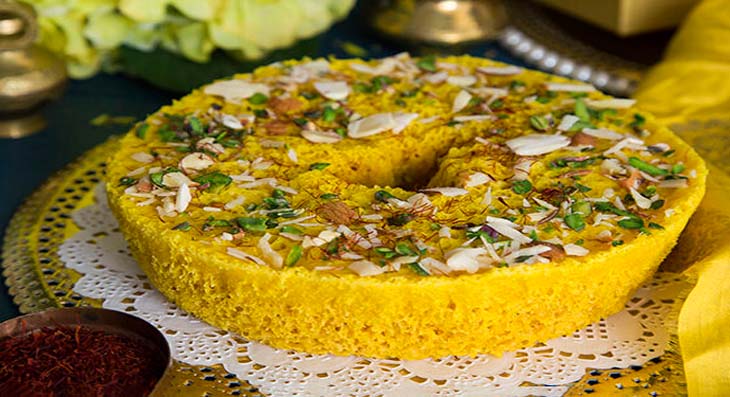
Ghevar is one of the most visually striking sweets in all of Indian cuisine. This disc-shaped dessert has a latticed, honeycomb-like structure made by pouring a thin batter of flour, ghee, and water in a spiral pattern into a deep vessel of hot ghee. The result is a lacy, porous disc that soaks up sugar syrup and, in its most luxurious versions, is topped with thick rabri (reduced sweetened cream), saffron strands, and chopped pistachios.
Ghevar is deeply tied to Rajasthan’s festival calendar. It is the quintessential sweet of Teej (the monsoon festival celebrating married love), Gangaur, and Makar Sankranti. Historically it appeared at royal thalis and is considered auspicious at weddings and ceremonies.
Varieties to try: Plain Ghevar (simplest, lightest), Mawa Ghevar (topped with thickened milk), Malai Ghevar (topped with fresh cream), Paneer Ghevar (richest, with fresh cheese).
Where to eat it: Laxmi Misthan Bhandar (Jaipur), also known as LMB, for over 70 years of Ghevar excellence; Natraj Restaurant (Jaipur) in the old city.
Read more: When are Rajasthan’s festivals? See our month-by-month Rajasthan festival calendar.
12. Mawa Kachori — the sweet surprise from Jodhpur
Vegetarian | Best for: breakfast or dessert | Must-try in: Jodhpur
While the savoury Pyaz Ki Kachori gets most of the fame, Mawa Kachori from Jodhpur is equally spectacular — a deep-fried pastry stuffed with a rich filling of mawa (khoya — dried whole milk), chopped dry fruits (almonds, cashews, pistachios), and cardamom, then soaked in rose-scented sugar syrup.
The contrast between the crispy, flaky pastry shell and the dense, sweet, nutty filling is extraordinary. It is eaten warm — ideally within minutes of coming out of the fryer — and is as much a dessert as it is a breakfast item.
Mawa Kachori was reportedly invented in Jodhpur’s old city several generations ago and remains a source of pride for the Blue City. It appears on every serious list of things you must eat in Jodhpur.
Where to eat it: Mishrilal Hotel (Jodhpur, near the clock tower) — the most famous Mawa Kachori shop in Rajasthan, drawing queues every morning.
13. Mohan Thaal — a saffron-scented royal sweet
Vegetarian | Best for: festive occasions, as a gift | Available in sweet shops across Rajasthan
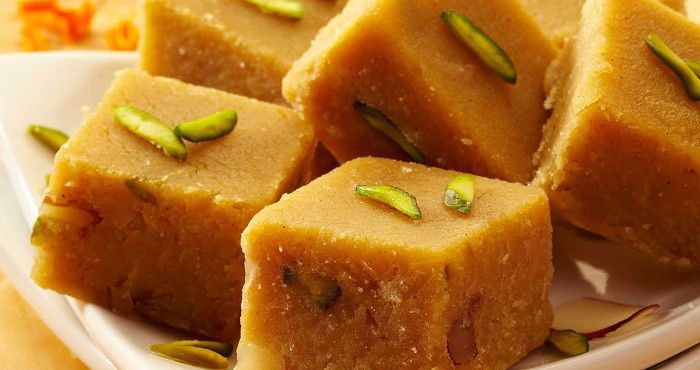
Mohan Thaal is a dense, fragrant sweet made from gram flour (besan) roasted in generous amounts of ghee until it turns golden and nutty, then mixed with milk, sugar, and saffron, and set in a tray to cool before being cut into squares or diamond shapes. It is garnished with cardamom, chopped almonds, and sometimes edible silver foil.
The sweet has deep roots in Rajasthan’s Vaishnavite temple traditions, where it is one of the revered Chhappan Bhog — the 56 food offerings made to the deity during major religious ceremonies. It is prepared especially during Diwali, Janmashtami, and Gangaur, and is a popular gifting sweet during festivals.
Taste profile: Rich, intensely nutty from the roasted besan and ghee, floral from the saffron, with a firm yet melt-in-the-mouth texture.
14. Badam Ka Halwa — the king of winter desserts
Vegetarian | Best for: dessert in winter | Available at sweet shops and heritage hotels
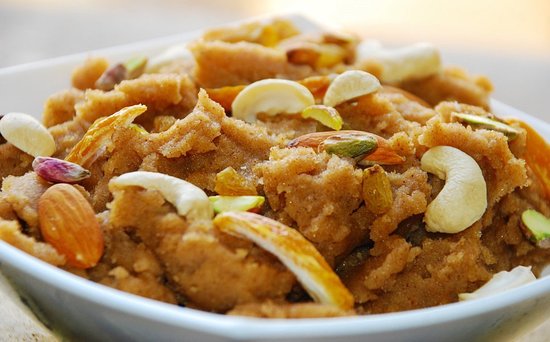
Badam Ka Halwa is Rajasthan’s most celebrated almond dessert — a slow-cooked preparation of soaked and ground almonds, ghee, milk, sugar, and saffron that produces a rich, slightly grainy, deeply fragrant halwa. The process requires patience: the ground almond paste must be stirred continuously in hot ghee for 20–30 minutes until it reaches the right colour and consistency.
The result is a dessert of extraordinary richness — warming, nourishing, and intensely satisfying on cold desert evenings. Almonds were historically considered one of the most important foods in Rajasthani royal medicine, valued for their warming properties and ability to sustain energy through harsh winters.
Best season to try it: November through February, when Rajasthan’s temperatures drop and this warming dessert is at its most appropriate.
15. Lehsun Ki Chutney — the fiery garlic paste that elevates everything
Vegetarian (vegan) | Best for: as a condiment with any Rajasthani meal | Available everywhere
Lehsun Ki Chutney (garlic chutney) may not be a dish in its own right, but no tour of Rajasthani food is complete without it. This intensely flavoured paste is made by grinding garlic cloves with dried red chillies, cumin, coriander, and a splash of water into a coarse, fiery condiment.
Lehsun Ki Chutney is the great amplifier of Rajasthani cuisine — a spoonful transforms a simple bajra roti and dal into something thrilling. It is served alongside Dal Baati Churma, with Pyaz Ki Kachori, and as a standard accompaniment to most Rajasthani thali spreads.
The chutney is also a nutritional powerhouse — garlic has long been valued in traditional Rajasthani medicine for its immunity-boosting and digestive properties, particularly important in a desert climate.
16. Bajra Roti — the everyday bread of rural Rajasthan
Vegetarian (vegan, gluten-free) | Best for: any meal | Available at traditional dhabas and homes
Bajra Roti is the everyday bread of traditional Rajasthan — thick, coarse flatbreads made from pearl millet (bajra) flour. Bajra thrives in arid climates where wheat and rice struggle, making it the most practical grain in the Thar Desert. These rotis are heartier and denser than wheat rotis, with a slightly earthy, nutty flavour.
A freshly made bajra roti, served hot from the tawa (griddle) with a generous dollop of white butter or desi ghee, is one of the most satisfying things you can eat in rural Rajasthan. Paired with Ker Sangri, Lehsun Chutney, or Gatte Ki Sabzi, it forms the backbone of authentic traditional Rajasthani meals.
Bajra is also nutritionally exceptional for a desert food — high in iron, magnesium, phosphorus, and fibre, and naturally gluten-free. It is the dietary foundation that sustained the Rajasthani people through centuries of harsh conditions.
17. Malpua — Rajasthan’s festive syrup-soaked pancake
Vegetarian | Best for: dessert or breakfast | Must-try in: Pushkar
Malpua is one of India’s oldest desserts, and Rajasthan — particularly the temple town of Pushkar — has its own beloved version. These are small, round, slightly crispy-edged pancakes made from a batter of flour, mawa (thickened milk), fennel seeds, and cardamom, deep-fried in ghee and then soaked in warm sugar syrup.
Rajasthani Malpua is typically served with Rabri — thick, slow-simmered sweetened milk cream — poured generously on top. The combination of crispy-edged pancake, soaked-through sweetness, and cold cream is arguably one of the finest dessert experiences in Rajasthan.
In Pushkar, where Malpua is particularly famous, you will find street vendors frying them fresh along the ghats of the holy lake — an atmospheric experience that combines flavour and setting perfectly.
18. Masala Chaas — the essential cooling drink
Vegetarian | Best for: with meals, especially lunch | Available throughout Rajasthan
In a state where summer temperatures regularly exceed 45°C, Masala Chaas (spiced buttermilk) is not just a beverage — it is a survival tool. Made by whisking yogurt with water, then seasoning it with roasted cumin powder, black salt, mint, ginger, and green chilli, Masala Chaas is cooling, probiotic-rich, and deeply refreshing.
Every restaurant, dhaba, and Rajasthani thali establishment serves chaas, and it is the ideal accompaniment to spicy dishes like Laal Maas or Mirchi Bada. In traditional households, large clay pots of chaas were kept at the doorstep to offer to passing travellers — a practice of Rajasthani hospitality that dates back centuries.
Variations: Some establishments serve it with a tadka of mustard seeds and curry leaves; sweeter versions made with fresh cream (lassi) are also popular, especially in Jodhpur and Jaipur.
19. Kalakand — Alwar’s legendary milk sweet
Vegetarian | Best for: dessert, festive gifting | Must-try in: Alwar
Kalakand is a soft, slightly grainy milk-based sweet that originated in Alwar, Rajasthan, where it is known as Alwar ka Mawa. Made by slow-cooking thickened whole milk (mawa or khoya) with sugar until it sets into a fudge-like consistency, Kalakand is garnished with cardamom and chopped pistachios and cut into squares.
The texture is what makes Alwar’s Kalakand legendary — it has a moist, slightly crumbly grain that melts on the tongue immediately, releasing a clean, milky sweetness that is less cloying than most Indian sweets. It is distinctly different from the harder, drier versions made elsewhere in India.
Alwar is less than 2 hours from Delhi and 3 hours from Jaipur, making it an accessible day trip for anyone serious about Rajasthani sweets. The best Kalakand shops are clustered near the Alwar railway station.
20. The Rajasthani Thali — experience the full royal spread
Vegetarian & non-vegetarian options | Best for: a full Rajasthani meal experience | Available in all major cities
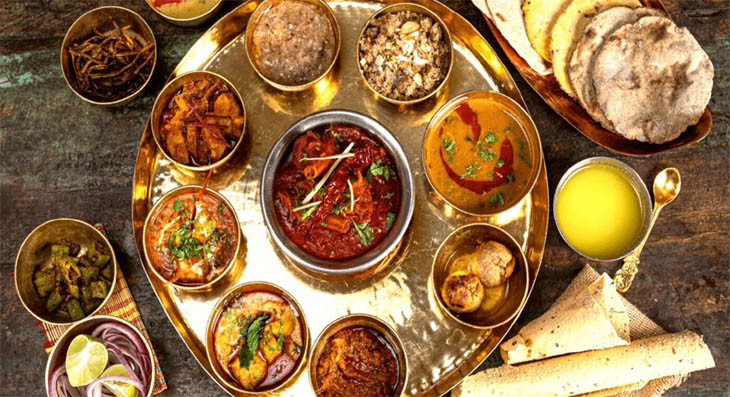
No guide to the famous food of Rajasthan would be complete without the Rajasthani Thali — the full, definitive expression of the state’s culinary identity served on a single large metal plate.
A standard Rajasthani vegetarian thali includes: Dal Baati Churma, Gatte Ki Sabzi, Ker Sangri, Rajasthani Kadhi, bajra roti, wheat roti, papad (lentil wafer), pickle (achar), churma ladoo or halwa as dessert, and Masala Chaas. Premium thalis at heritage hotels may include 20 to 36 rotating dishes and are genuinely enormous — the benchmark for how much ghee and spice the human body can process in one sitting.
Where to experience the best Rajasthani Thali:
- Jaipur: Chokhi Dhani — a full cultural village experience with folk music, dance, and an unlimited thali; LMB Restaurant in the old city for a more intimate traditional setting.
- Jodhpur: Pal Haveli’s rooftop restaurant — a 36-dish rotating thali for approximately ₹700 (around $8.50 USD), considered one of the most comprehensive Rajasthani Thali experiences available.
- Udaipur: Ambrai Restaurant on the lake shore, and Upre by 1559 AD at Lake Pichola Hotel.
- Jaisalmer: Desert Boy’s Dhani for a desert camp thali experience under the stars.
Explore our Rajasthan tour packages — many of our itineraries include curated food experiences and Thali dinners at traditional venues.
Best places to eat authentic Rajasthani food: city-by-city guide
Best Rajasthani food in Jaipur (Pink City)
Jaipur is the easiest city to sample Rajasthani cuisine in depth, with options ranging from fine dining in palace hotels to legendary street food in the old city bazaars. The area around Johari Bazaar and Tripolia Bazaar offers excellent kachoris, jalebi, and mirchi badas from vendors who have been in operation for generations. Rawat Misthan Bhandar is the gold standard for Pyaz Ki Kachori. For a full thali, Chokhi Dhani combines authentic food with a heritage village atmosphere about 20 km from the city centre.
Best Rajasthani food in Jodhpur (Blue City)
Jodhpur is the home of Mirchi Bada and Mawa Kachori, and the old city market area around Sardar Market and the clock tower is one of the best street food zones in Rajasthan. Mishrilal Hotel (near the clock tower) is the legendary Mawa Kachori destination. For Laal Maas and a full dinner, Indique Restaurant at the Hotel Indra Bhawan offers fort views from its rooftop. The Pal Haveli rooftop restaurant is the go-to for the most comprehensive Thali in the city.
Best Rajasthani food in Udaipur (Lake City)
Udaipur’s restaurant scene blends authentic Rajasthani food with scenic lakeside dining. Ambrai Restaurant, directly on the banks of Lake Pichola, serves a beautiful Rajasthani thali with views of the City Palace. Natraj Dining Hall in the old city is a more traditional, no-frills option beloved by locals for its daily thali. The markets around Jagdish Temple have excellent street food including kachoris and jalebi.
Best Rajasthani food in Jaisalmer (Desert City)
Jaisalmer’s food scene is enhanced by the atmosphere of dining inside the golden fort or at desert camps. Trio Restaurant inside the fort walls serves excellent Laal Maas and a traditional thali. For a more immersive experience, several desert camps outside the city offer traditional Rajasthani dinners with folk performances around a bonfire — the ideal setting to experience the food in context.
Read also: Your guide to Desert Safaris in Rajasthan — Jaisalmer, Jodhpur & Bikaner.
🇮🇳 Plan your Rajasthan food journey
From Jaipur’s Kachoris to Jodhpur’s Mawa Kachori — We’ll Take You There
YoYo Trips India crafts personalised Rajasthan tours that combine iconic food stops, heritage stays, fort visits, and desert experiences into one seamless itinerary.
Explore Rajasthan Travel Packages →✓ Tailor-made for your dates • ✓ Expert local guides • ✓ Best price guarantee
Quick reference: all 20 famous Rajasthani dishes at a glance
| Dish | Type | Spice level | Best meal |
|---|---|---|---|
| Dal Baati Churma | Vegetarian | Mild–medium | Lunch / dinner |
| Laal Maas | Non-vegetarian | Very spicy | Dinner |
| Pyaz Ki Kachori | Vegetarian | Medium | Breakfast / snack |
| Mirchi Bada | Vegetarian | Very spicy | Breakfast / snack |
| Gatte Ki Sabzi | Vegetarian | Medium | Lunch / dinner |
| Ker Sangri | Vegetarian | Mild–medium | Side dish |
| Kadhi | Vegetarian | Medium | Lunch |
| Safed Maas | Non-vegetarian | Mild | Dinner |
| Bikaneri Bhujia | Vegetarian | Medium | Snack |
| Bajra Ki Raab | Vegetarian | Mild | Breakfast (winter) |
| Ghevar | Vegetarian (sweet) | None | Dessert / festive |
| Mawa Kachori | Vegetarian (sweet) | None | Breakfast / dessert |
| Mohan Thaal | Vegetarian (sweet) | None | Dessert / festive |
| Badam Ka Halwa | Vegetarian (sweet) | None | Dessert |
| Lehsun Ki Chutney | Vegetarian (vegan) | Very spicy | Condiment |
| Bajra Roti | Vegetarian (vegan) | None | Any meal |
| Malpua | Vegetarian (sweet) | None | Breakfast / dessert |
| Masala Chaas | Vegetarian | Mild | Beverage with meals |
| Kalakand | Vegetarian (sweet) | None | Dessert / gift |
| Rajasthani Thali | Veg & non-veg | Varies | Full meal |
Frequently asked questions about the famous food of Rajasthan
What is the most famous food of Rajasthan?
Dal Baati Churma is widely regarded as the most famous food of Rajasthan. It is a three-component meal combining five-lentil dal, crispy ghee-soaked baked wheat baati, and sweet churma made from crushed baati mixed with jaggery and ghee. It is served at weddings, religious festivals, and in virtually every Rajasthani restaurant across the state and beyond.
What is the most famous sweet of Rajasthan?
Ghevar is Rajasthan’s most iconic sweet — a disc-shaped, honeycomb-textured dessert made from flour, ghee, and sugar syrup, topped with rabri (thickened cream) and nuts. It is especially celebrated during the festivals of Teej, Makar Sankranti, and Gangaur. Other famous Rajasthani sweets include Mohan Thaal, Badam Ka Halwa, Mawa Kachori, and Kalakand from Alwar.
Is Rajasthani food very spicy?
Rajasthani food covers a wide spectrum from mildly spiced to intensely fiery. Dishes like Laal Maas and Mirchi Bada are very spicy, while options like Dal Baati Churma, Safed Maas, Ghevar, and Mawa Kachori are mild and accessible to all palates. At most restaurants, you can request reduced spice levels. The desserts and sweets of Rajasthan contain no spice at all.
What do people eat for breakfast in Rajasthan?
Popular Rajasthani breakfast options include Pyaz Ki Kachori (spiced onion pastries) with tamarind chutney, Mirchi Bada with masala chai, Mawa Kachori from Jodhpur, and Poha (flattened spiced rice). In traditional homes, particularly during winter, Bajra Ki Raab — a warm pearl millet porridge with ghee and jaggery — is a common morning staple.
What is a Rajasthani Thali and what does it include?
A Rajasthani Thali is a traditional full-course meal served on a large round metal plate. A standard vegetarian thali typically includes Dal Baati Churma, Gatte Ki Sabzi, Ker Sangri, Rajasthani Kadhi, bajra roti, wheat roti, papad, pickle, churma ladoo or halwa for dessert, and Masala Chaas as a beverage. Heritage hotel thalis can include 15–36 rotating dishes and are served unlimited. The Pal Haveli thali in Jodhpur (36 dishes) and the Chokhi Dhani thali in Jaipur are considered among the most comprehensive in the state.
Is Rajasthani food vegetarian-friendly?
Yes — Rajasthan is one of India’s most vegetarian-friendly regions, with surveys suggesting over 74% of the state’s population is vegetarian. The majority of Rajasthan’s most beloved and iconic dishes are vegetarian: Dal Baati Churma, Gatte Ki Sabzi, Ker Sangri, Kadhi, Pyaz Ki Kachori, Bajra Roti, Ghevar, Mohan Thaal, and more. Non-vegetarian dishes like Laal Maas and Safed Maas are available at select restaurants, but vegetarians will never feel short-changed in Rajasthan.
Where is the best place to eat Rajasthani food?
The best cities for authentic Rajasthani food are: Jaipur (Chokhi Dhani, Rawat Misthan Bhandar for kachoris, LMB Restaurant); Jodhpur (Mishrilal Hotel for Mawa Kachori, Pal Haveli rooftop for Thali, Indique for Laal Maas); Udaipur (Ambrai Restaurant at Lake Pichola, Natraj Dining Hall); and Bikaner for original Bikaneri Bhujia. Heritage hotels and traditional dhabas across all four cities consistently deliver the most authentic culinary experiences.
What is Dal Baati Churma made of?
Dal Baati Churma consists of three components. Dal is made from a five-lentil mix (toor, chana, moong, urad, masoor) cooked with spices and finished with a ghee tadka. Baati are firm dough balls made from wheat flour, ghee, and a pinch of salt, baked in a clay oven or over charcoal until golden and crispy, then dunked in melted ghee. Churma is made by coarsely crushing the baked baati and combining with jaggery or sugar, ghee, and often cardamom and chopped dry fruits — serving as the sweet element of the trio.
Your Rajasthan Food Adventure Starts Here
Every dish on this list is waiting to be tasted. Let YoYo Trips India build your personalised Rajasthan itinerary — heritage hotels, local food walks, desert safaris, and a Thali dinner you won’t forget.
✓ Customisable • ✓ All budgets • ✓ Jaipur • Jodhpur • Udaipur • Jaisalmer • Bikaner
Final thoughts: savour Rajasthan through its food
The famous food of Rajasthan is far more than a collection of recipes — it is a living record of how a people thrived against extraordinary odds. Every dish, from the humble Bajra Ki Raab to the lavish Safed Maas, carries the ingenuity, resilience, and generosity of the Rajasthani people. The cuisine is proud of its desert origins, its royal heritage, and its deeply rooted spice traditions.
Whether you are spending a day in Jaipur picking up kachoris from Rawat Misthan Bhandar, dining under a starlit sky at a Jaisalmer desert camp, or sitting down to a 36-dish thali at a Jodhpur haveli, eating in Rajasthan is one of the most vivid and memorable aspects of travelling through this extraordinary state.
Ready to taste it for yourself? Explore our Rajasthan tour packages — we build itineraries that take you to the best markets, heritage restaurants, and desert dining experiences across Jaipur, Jodhpur, Udaipur, Jaisalmer, and beyond. Your culinary adventure through the Land of Kings starts here.
You might also enjoy
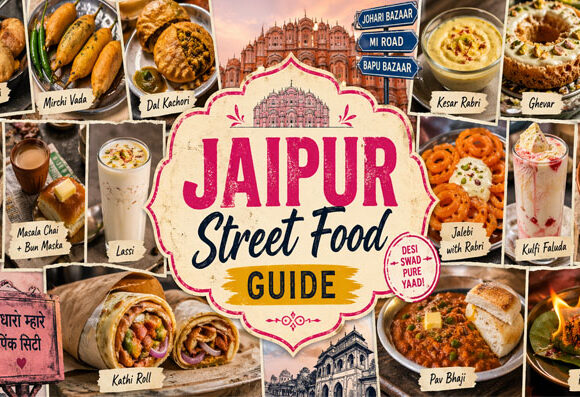
- Jaipur Street Food Guide: 15 Must-Try Dishes, Best Stalls & Exact Locations (2026)
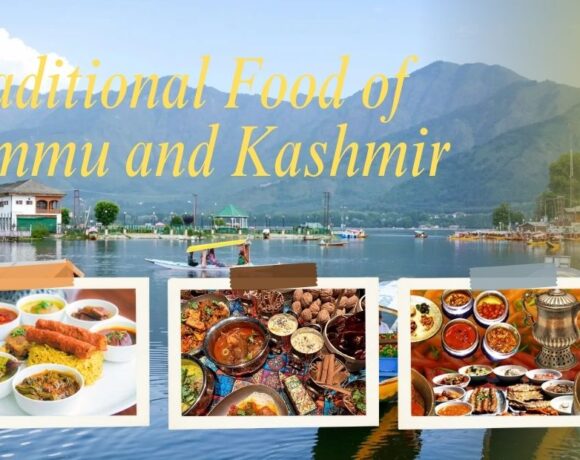
- Traditional food of Jammu and Kashmir: a comprehensive guide

YoYo Trips India Editorial Team is a group of travel experts and content creators who publish well-researched guides, itineraries, and travel tips across India, helping travelers plan smooth and memorable trips.