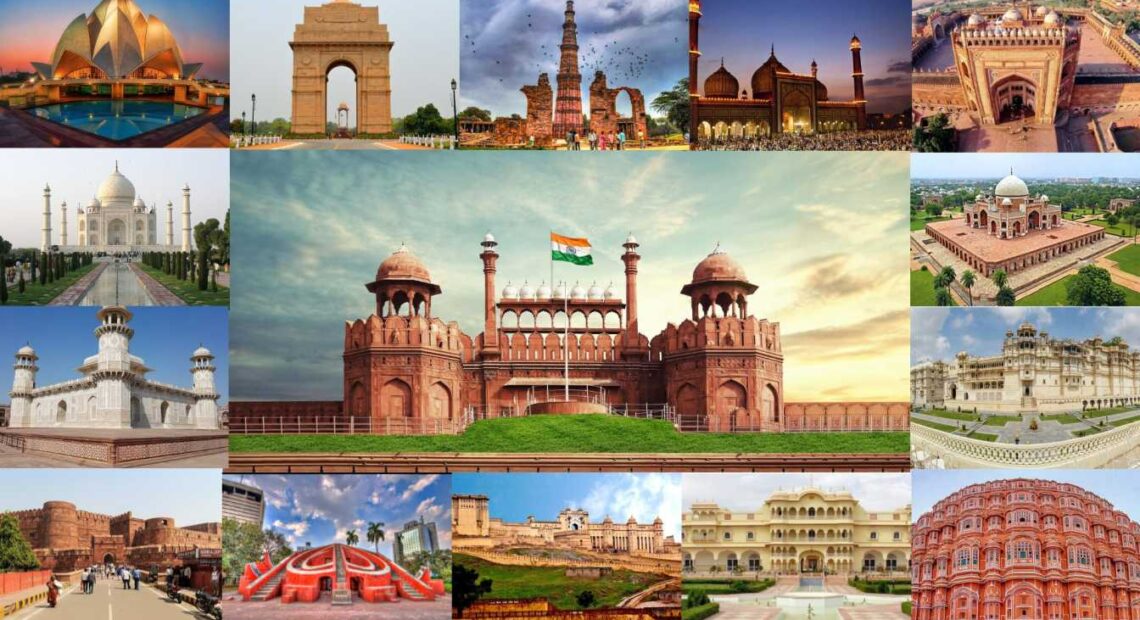
The Golden Triangle — Delhi, Agra, and Jaipur — is India’s most celebrated travel circuit, packing three of the world’s great cities and three UNESCO World Heritage Sites into a single seamless journey. First-time visitors to India almost universally start here, and it’s easy to see why: within 230–280 km of each other, these three cities collectively offer Mughal grandeur, Rajput royalty, and a living capital city that is simultaneously ancient and hypermodern.
Wondering when to plan your visit? Read our complete guide on the best time to visit Golden Triangle India for month-by-month weather, festival dates, and crowd tips →
This guide covers all 15 must-visit attractions across the three cities — with entry fees, timings, insider tips, and the honest ‘don’t miss’ advice that most blogs leave out. All information is current for 2026.
Golden Triangle Attractions at a Glance — 2026 Quick Reference
| # | Attraction | City | Foreigners Entry Fee | Time Needed | Must-See Moment |
|---|---|---|---|---|---|
| 1 | Taj Mahal | Agra | ₹1,100 (~$13) | 2–3 hours | Sunrise reflection in the pools |
| 2 | Agra Fort | Agra | ₹650 (~$8) | 1.5–2 hours | Taj Mahal framed through Musamman Burj window |
| 3 | Fatehpur Sikri | Agra (40 km) | ₹610 (~$7) | 1.5–2 hours | Buland Darwaza — world’s tallest gateway |
| 4 | Itmad-ud-Daulah’s Tomb | Agra | ₹310 (~$4) | 45 mins | Intricate pietra dura marble inlay — precursor to Taj Mahal |
| 5 | Red Fort | Delhi | ₹600 (~$7) | 2 hours | Lahori Gate main entrance + Sound & Light Show (evening) |
| 6 | Qutub Minar | Delhi | ₹650 (~$8) | 1–1.5 hours | 73 m minaret — world’s tallest brick tower |
| 7 | Humayun’s Tomb | Delhi | ₹600 (~$7) | 1–1.5 hours | Charbagh garden — the template for the Taj Mahal |
| 8 | Jama Masjid | Delhi | Free (camera ₹300) | 45 mins | Courtyard at prayer time — atmospheric and vast |
| 9 | India Gate | Delhi | Free | 30–45 mins | Illuminated at night — best after sunset |
| 10 | Lotus Temple | Delhi | Free | 45 mins | Petal-shaped architecture + meditative silence inside |
| 11 | Amber Fort | Jaipur | ₹500 (~$6) | 2–3 hours | Sheesh Mahal (Hall of Mirrors) — 1,000 mirror mosaic ceiling |
| 12 | Hawa Mahal | Jaipur | ₹200 (~$2) | 45 mins | 953 windows facade — best photographed from the street opposite |
| 13 | City Palace | Jaipur | ₹700 (~$8) | 1.5–2 hours | Mubarak Mahal — textile museum with Maharaja’s robes |
| 14 | Jantar Mantar | Jaipur | ₹200 (~$2) | 45 mins–1 hour | Samrat Yantra — world’s largest sundial (still accurate) |
| 15 | Nahargarh Fort | Jaipur | ₹200 (~$2) | 1 hour | Panoramic sunset view over the Pink City skyline |
*Entry fees current as of 2026. Book Taj Mahal tickets online at asi.payumoney.com to avoid queues.
Delhi: A Capital of Contrasts

The Golden Triangle journey will usually start in Delhi, a large city where ancient past and present day life co-exist. Delhi attractions provide an interesting contrast, ranging from the cramped streets and historic landmarks of Old Delhi to the ordered boulevards and public buildings of New Delhi.
Some of the main Attractions in Golden Triangle are:
- Red Fort: A grand Mughal-era fortress, a UNESCO World Heritage site.
- Jama Masjid: India’s biggest mosque, a beautiful Mughal building.
- Qutub Minar: A tall minaret, a part of a complex dating to the Delhi Sultanate.
- Humayun’s Tomb: An ancestor of the Taj Mahal, famous for its lovely Mughal garden backdrop.
- India Gate: A war memorial and landmark.
- Lotus Temple: A breathtaking Baháʼí House of Worship famous for its flower-like form.
- Chandni Chowk (Old Delhi): A disordered but entrancing bazaar presenting a sensory overkill of color, noise, and aroma.
Agra: The Eternal Icon

Agra: The Eternal Icon
No place on earth announces itself the way Agra does. The moment you pass through the eastern gate of the Taj Mahal complex and that white marble dome appears above the gateway arch — framed perfectly, perfectly symmetrical — every photograph you’ve ever seen of it becomes instantly inadequate. Agra is its monuments, and they are extraordinary.
1. Taj Mahal
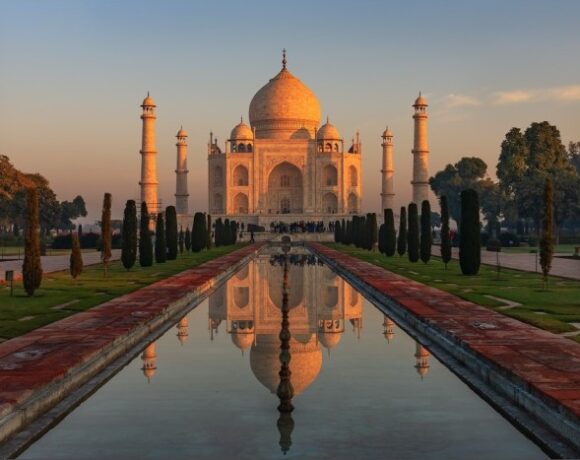
Why it’s unmissable: Built between 1631 and 1653 by Emperor Shah Jahan as a mausoleum for his wife Mumtaz Mahal, the Taj Mahal is a UNESCO World Heritage Site and one of the Seven Wonders of the Modern World. Its 28 types of semi-precious stones inlaid into white Makrana marble make it the supreme achievement of Mughal architecture.
- Best time to visit: Arrive at opening (30 minutes before sunrise). The marble turns rose-gold at dawn — this is the moment.
- Entry fee (2026): ₹1,100 for foreign nationals (~$13) | ₹50 for Indian nationals. Book online at asi.payumoney.com to skip the queue.
- Closed: Every Friday.
- Insider tip: Visit Mehtab Bagh (the moonlight garden across the Yamuna River) for the best sunset view of the Taj — no entry fee, far fewer tourists.
- Time needed: 2–3 hours minimum.
2. Agra Fort
Why it’s unmissable: This massive red sandstone fort served as the main residence of the Mughal emperors until 1638. Inside, you can see the Musamman Burj — the tower where Shah Jahan was imprisoned by his son Aurangzeb and spent his last years gazing at the Taj Mahal from across the river.
- Entry fee (2026): ₹650 for foreigners | ₹35 for Indians.
- Best combined with: Visit immediately after the Taj Mahal — it’s just 2.5 km away.
- Time needed: 1.5–2 hours.
3. Fatehpur Sikri
Why it’s unmissable: Emperor Akbar’s abandoned Mughal capital, built entirely from red sandstone and mysteriously deserted just 14 years after completion due to water shortage. It’s one of the best-preserved Mughal cities in India and far less crowded than the Taj.
- Entry fee (2026): ₹610 for foreigners | ₹35 for Indians.
- Location: 40 km from Agra — the perfect stop en route to Jaipur (Day 4 on our standard itinerary).
- Don’t miss: Buland Darwaza (the 54-metre high Victory Gate), the Tomb of Salim Chishti, and the five-storey Panch Mahal.
- Time needed: 1.5–2 hours.
4. Itmad-ud-Daulah’s Tomb (Baby Taj)
Often skipped by visitors focused on the Taj Mahal, this is a grave error. Built in 1628, the Baby Taj was the first Mughal structure built entirely from white marble and the first to use pietra dura (intricate stone inlay) — the technique later used on the Taj Mahal itself. It’s smaller, intimate, and almost always quiet.
- Entry fee (2026): ₹310 for foreigners | ₹20 for Indians.
- Time needed: 45 minutes.
🕌 Experience Agra with an Expert Guide
Our Agra-based guides know which angle to stand at for the perfect Taj Mahal shot, how to avoid the ticket queues, and the stories behind the marble that no audio guide tells. Included in all YoYo Trips India Golden Triangle packages.
Book Your Agra Visit as Part of a Package →Jaipur: The Royal Pink City

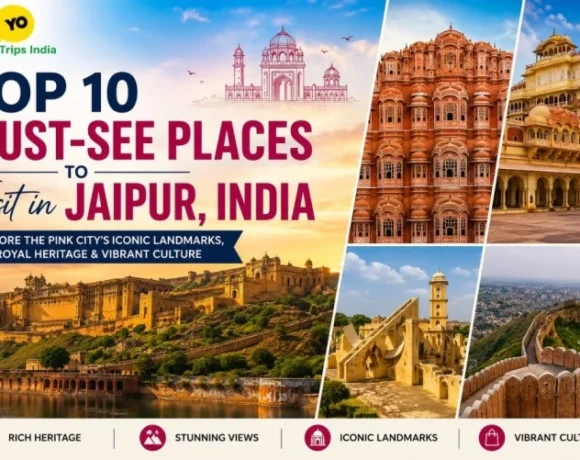
The trip completes in Jaipur, Rajasthan’s vibrant capital, famous for its buildings painted a deep pink color and its rich Rajput past. A visit carries you back in time to an age of kings and queens.
Major attractions are:
- Amer Fort: A glorious hill fort situated just beyond the city, famous for its beautiful architecture and elephant rides.
- Hawa Mahal: The famous “Palace of Winds,” with its delicate facade of hundreds of small windows.
- City Palace: A series of palaces, courtyards, and gardens located in the middle of Jaipur.
- Jantar Mantar: An astronomical observatory constructed by Maharaja Jai Singh II.
- Nahargarh Fort: Providing a bird’s-eye view of the Pink City, particularly stunning at sunset.
In Jaipur one can experience the royal grandeur with a camel ride near Amer Fort or get a unique perspective of the city with a hot air balloon ride over Jaipur. For a taste of authentic Rajasthani culture, a visit to Chokhi Dhani, a cultural village, is a must to conclude the trip.
When exploring Jaipur, it’s ideal to plan your visit during the cooler months between October and March, which is widely considered the best time to travel in Rajasthan, offering pleasant weather for sightseeing and desert experiences.
🏰 See All These Jaipur Highlights — Without the Hassle
Amber Fort, Hawa Mahal, City Palace, Jantar Mantar, and Nahargarh Fort — all included in our Jaipur day itinerary. Private car, expert local guide, and no standing in ticket queues.
View Jaipur Packages from YoYo Trips India →Understanding the Golden Triangle India Distance
The Golden Triangle India distance refers to the roughly equilateral triangle formed by these three cities. The distances are approximately:
| Places to and fro | Distance |
| Delhi to Agra: | Approximately 230 km |
| Agra to Jaipur: | Approximately 240 km |
| Jaipur to Delhi: | Approximately 280 km |
These cities are connected by a network of roads and railways, and travel between them is relatively easy, particularly when using Golden Triangle trip packages that usually incorporate comfortable transport.
Beyond Sightseeing: Activities and Experiences
A Golden Triangle tour is more than seeing monuments. It’s an experience of the soul of India. In addition to the major sights, don’t miss these experiences:
- Camel Ride at Jaipur: A classic means of seeing the desert landscape around the city.
- A boat ride on the Yamuna River in Agra provides a serene and alternative perspective on the Taj Mahal.
- Shopping in Local Bazaars: Explore the vibrant markets of Chandni Chowk (Delhi), Agra’s emporiums for marble and leather goods, and Jaipur’s Johari Bazar for textiles, jewelry, and handicrafts. Remember you can hone your bargaining skills.
- Viewing the Taj Mahal on a Full Moon Night: A truly unforgettable and ethereal experience.
- Hot Air Balloon Ride in Jaipur: Provides a stunning aerial perspective of the Pink City and its surroundings.
- Cultural experience: truly immerse in the culture of Rajasthan at Chokhi Dhani, Jaipur, where one can experience traditional folk music, dance, and traditional Rajasthani cuisine amidst a village ambience.
A Culinary Journey and Souvenir Hunt
Exploring the local food and collecting souvenirs is an integral part of the Golden Triangle experience:
Delhi is renowned for its street food (“chaat”) such as Pani Puri, Aloo Tikki, and Papri Chaat to truly indulge in mouth exploding flavors, and has an array of selection for decorative jewelry, clothes, spices, and crafts in areas like Chandni Chowk for a one of a kind experience
Agra is famous for Petha, a local sweet cuisine and the love symbol Taj Mahal. Which are then hunted as souvenirs as miniature replicas of the Taj Mahal. Some other souvenirs are marble inlay art and leather items.
Jaipur: Jaipur is also a culinary delight—don’t leave without trying Dal Baati Churma, Gatte ki Sabzi, and other famous dishes in Rajasthan that showcase the region’s bold flavors and royal roots. Whereas souvenirs are concerned, every city provides special treasures. In Jaipur get colorful Rajasthani clothes, blue potteries, embroidered quilts, and lovely jewelry, including pieces made up of precious and semi-precious stones.
Best time to visit the Golden Triangle
The best time to visit Golden Triangle India is typically between October and March, when the weather across Delhi, Agra, and Jaipur is ideal for sightseeing and outdoor activities.
The standard tour duration for a Golden Triangle tour is approximately 3 to 4 days, with sufficient time to cover the main attractions in each city. But you can choose longer packages for a deeper exploration or to cover other nearby places.
There are different Golden Triangle tour packages offered, with varying budgets and travel preferences, ranging from short tours to luxurious and personalized ones. Most packages include city-to-city transportation, accommodation, and guided tours, making your trip planning easier.
Conclusion
Golden Triangle tour is a concentrated but complete experience of India’s diverse heritage, lively culture, and architectural splendor. From Delhi’s historic roads to Agra’s timeless splendor of the Taj Mahal and Jaipur’s royal grace, this circuit imprints itself on every visitor forever. Regardless of your interest in history, fascination for architecture, or desire for cultural experience, traveling through the places to visit in Delhi, Agra and Jaipur guarantees an unforgettable trip to the core of this phenomenal nation.
While the Golden Triangle covers some of the top highlights, there are countless other best places to visit in North India that offer majestic mountains, spiritual experiences, and lush valleys beyond this iconic circuit.
Plan Your Golden Triangle Trip Today
All 15 attractions above are covered in our 6-day Golden Triangle tour package — starting from ₹17,499 per person ($209). Private car, expert guides in Delhi, Agra & Jaipur, daily breakfast, and airport transfers included.
View All Golden Triangle Trip Packages Get a Custom QuoteFrequently Asked Questions
Yes, certainly! The Golden Triangle of Delhi, Agra, and Jaipur is an intriguing entry into India’s varied landscapes, historical wealth, and energetic culture, particularly for the first-time traveler. The popular tourist trail delivers a superb range of India’s delights in a fairly tolerable period and travel distance.
The tourist spots of the Golden Triangle are many and iconic. Delhi boasts the Red Fort, Qutub Minar, Humayun’s Tomb, India Gate, Lotus Temple, Jama Masjid, and Chandni Chowk. Agra has the Taj Mahal, Agra Fort, Fatehpur Sikri, and Itmad-ud-Daulah’s Tomb. Jaipur has the Amber Fort, Hawa Mahal, City Palace, Jantar Mantar, and Jal Mahal.
The Golden Triangle is renowned for presenting a combination of India’s ancient grandeur, architectural masterpieces, and cultural diversity. It gives a glimpse into the opulence of the Mughal period, the bravery of Rajputana, and Delhi’s ancient history as a center of power. The circuit is also famous for its well-set tourist infrastructure, and hence it is comparatively easy for foreign tourists to travel around.
The best time to travel to the Golden Triangle is between October and March, which is the winter season. The climate is nice with warm sunny days during the day, and sightseeing is pleasant. Be advised that North India may have smog during winter, mainly Delhi.
A standard Golden Triangle tour is typically 5 to 7 days long. This gives one sufficient time to visit the important sites in every city. The itineraries can be personalized according to interest and time, though.
Yes — and it is strongly recommended. You can book Taj Mahal tickets online at asi.payumoney.com (Archaeological Survey of India’s official portal). Online tickets mean you skip the main ticket queue entirely, saving 30–60 minutes on busy days. Tickets cost ₹1,100 for foreign nationals and ₹50 for Indian nationals (2026 rates). Remember: the Taj Mahal is closed every Friday.
Golden Triangle tour packages start from ₹17,499 per person ($209) for a 6-day itinerary with YoYo Trips India. This includes a private air-conditioned car, English-speaking guides in all three cities, daily breakfast, and airport/hotel transfers. Luxury packages with 5-star hotels and premium experiences start from approximately ₹60,000 per person. For a detailed cost breakdown, see our Golden Triangle tour packages page.
Yes — our 6-day Golden Triangle itinerary comfortably covers all major attractions in Delhi (Day 1–2), Agra (Day 3), Fatehpur Sikri and Jaipur (Day 4), and a full Jaipur day (Day 5), before returning to Delhi (Day 6). Shorter 4-day trips cover the essential highlights with a faster pace. We recommend 6 days for first-time visitors who want to see everything without rushing.

Pooja Sharma is a passionate travel writer and content specialist with a keen interest in exploring India’s diverse culture, heritage, and landscapes. She specializes in creating well-researched travel guides, itineraries, and destination-based content that helps readers plan meaningful and hassle-free journeys.