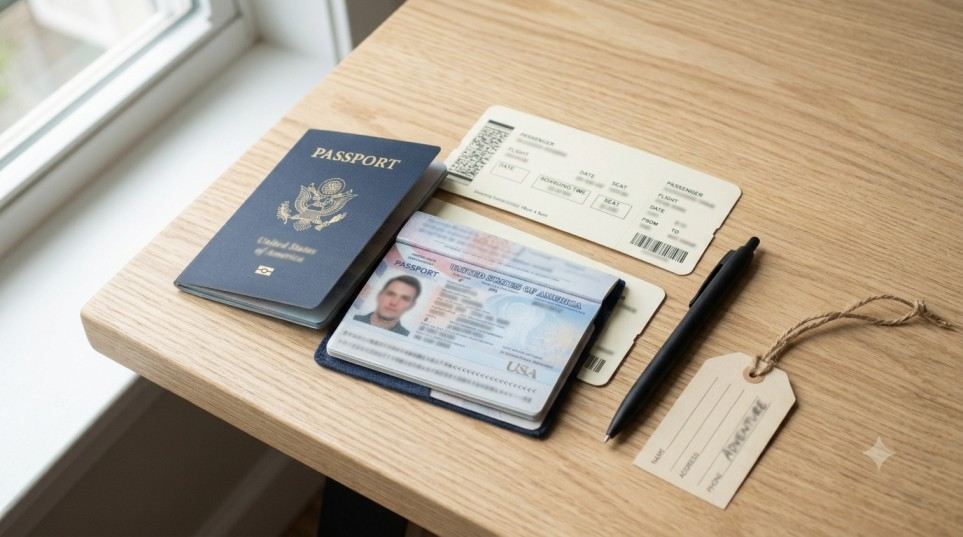
If you’re American and planning any trip to India—Rajasthan, the Golden Triangle, Kerala, or anywhere else—this is the first practical step, before flights, before packing lists, before anything else. Here’s the direct version, with the numbers that actually matter.
Do US Citizens Need a Visa for India?
Yes. There’s no visa-on-arrival for US passport holders, and there’s no way around it. The good news: the process is entirely online, takes about 20-30 minutes to fill out, and you never mail your passport anywhere or visit a consulate in person. This is the e-Tourist Visa, issued as an Electronic Travel Authorization (ETA), and it’s the right visa type for sightseeing, visiting friends and family, or a short yoga or wellness trip.
The only official portal is indianvisaonline.gov.in. A long list of third-party sites will show up above it in search results, styled to look official, charging $80-150+ in “service fees” on top of the real government fee. You don’t need any of them.
e-Tourist Visa Options
| Type | Validity | Max Stay Per Visit | Entries |
| 30-Day e-Tourist Visa | 30 days from arrival | 30 days | Double entry |
| 1-Year e-Tourist Visa | 365 days from ETA grant | 180 days per visit | Multiple entry |
| 5-Year e-Tourist Visa | 5 years from ETA grant | 180 days per visit | Multiple entry |
For a standard 10-14 day trip anywhere in India, the 30-day option covers you. If there’s any chance you’ll be back within the next year or two—plenty of our clients return for a second region after their first trip, whether that’s Rajasthan after the Golden Triangle or Kerala after the north—the 1-year visa is worth the small price difference so you’re not reapplying from scratch.
What It Actually Costs
Per the Government of India’s official country-wise fee schedule (Bureau of Immigration, last updated September 2026), here’s exactly what US passport holders pay:
| Visa Type | Government Fee (US Citizens) |
| 30-Day e-Tourist Visa (April-June) | $10 |
| 30-Day e-Tourist Visa (July-March) | $25 |
| 1-Year e-Tourist Visa | $40 |
| 5-Year e-Tourist Visa | $160 |
Two things worth knowing here: fees are set on a reciprocal, nationality-specific basis, and interestingly, US citizens pay less than most other nationalities for the 5-year visa—the standard rate for most countries is $200, while UK passport holders pay $484 for the same visa. On top of whichever fee applies:
- A 3% bank transaction charge applies for card payments (4% if paying via PayPal)
- The fee is non-refundable, whether your ETA is approved or not
- Fees are reviewed periodically, so confirm the current figure on indianvisaonline.gov.in before paying—don’t budget off any blog post, including this one
How to Apply—Step by Step
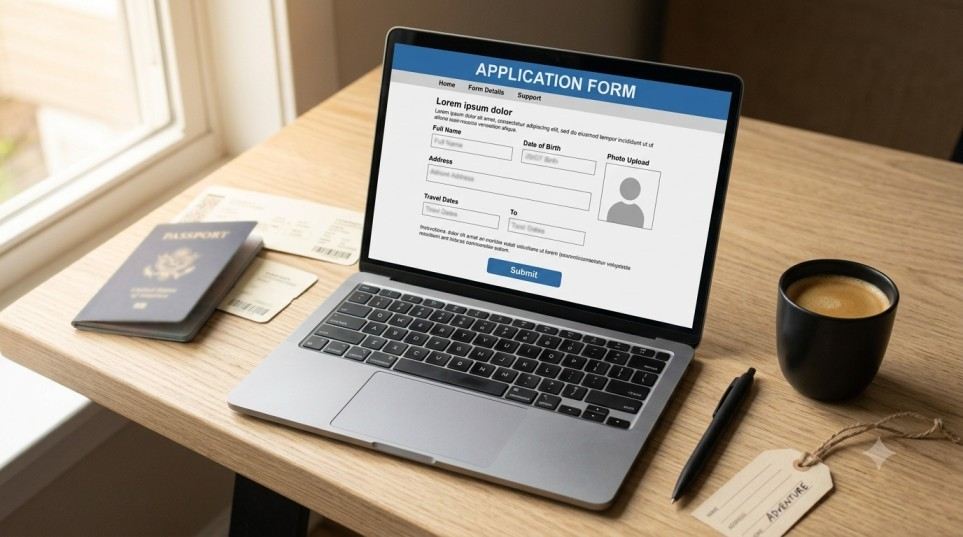
You can apply as early as 120 days before your trip and as late as 4 days before arrival—though as noted above, we don’t recommend cutting it that close. You’ll also need a return or onward-journey ticket and proof of sufficient funds for your stay, both standard eligibility requirements for the e-Tourist Visa.
- Go to indianvisaonline.gov.in and start a new e-Tourist Visa application.
- Enter your passport and personal details exactly as they appear on your passport—mismatches here are the single biggest cause of rejection.
- Upload a digital passport photo (white background, recent, face fully visible—no glasses, no hats) and a scan of your passport’s bio page.
- Answer the trip-purpose questions honestly; tourism, visiting family, and short wellness/yoga trips all qualify for the e-Tourist category.
- Pay the government fee plus the bank charge by card.
- Save your application ID immediately. You’ll need it to check status if anything goes wrong.
- Wait for your ETA by email, then check your status directly at indianvisaonline.gov.in/evisa/visaStatus.html to confirm it independently.
- Print the ETA (a physical copy, not just a phone screenshot) and carry it with your passport through Indian immigration.
How Long Processing Actually Takes
| Scenario | Typical Processing Time |
| Standard application, most of the year | 2-4 business days |
| Peak season (October-February) | Up to 5-6 business days |
| Minimum legal cutoff before travel | 4 days before arrival |
| Our recommendation | Apply 2-3 weeks before departure. |
Technically you can apply as late as 4 days before your flight, but we don’t recommend cutting it that close. Payment confirmation alone can take up to 2 hours to register on the portal, and if anything in your application needs correcting, a tight timeline turns a minor fix into a real problem.
Documents You’ll Need
- US passport with at least 6 months’ validity remaining beyond your planned arrival date and at least 2 blank pages
- A digital passport-style photo, recent and unedited
- A clear scan or photo of your passport’s bio page
- A valid credit or debit card
- Your travel dates and first night’s accommodation address (you’ll be asked for this on the form)
Mistakes That Cause Delays or Rejections
- Applying through a third-party site, thinking it’s the government portal—the fee is higher and processing isn’t any faster
- Passport details that don’t match exactly (a middle name left off, a transposed digit)
- Blurry or non-compliant photos—the system’s automated check rejects a surprising number of phone selfies
- Applying too close to your travel date and having no buffer if something needs fixing
- Forgetting to print the physical ETA—some airlines and immigration counters still expect a printed copy, not just an email
How Long Can You Actually Stay?
This trips people up on the 1-year and 5-year visas: the visa’s validity period is not the same as your permitted stay. The government’s rule, stated exactly as it appears on the official portal, is “Maximum stay in India during one calendar year should not exceed 180 days for 1-year and 5-year tourist visas.” In practice, that means a single continuous visit can’t exceed 180 days either, since it falls within that same calendar-year count. You can exit and re-enter as many times as your visa allows within that window.
One more thing worth knowing if you’ve read older advice: India’s old paper tourist visa system used to require a mandatory 2-month gap between visits. That restriction predates the e-Visa system entirely—e-Tourist Visas (launched in 2014) were never built with that rule, and separately, the paper-visa gap requirement itself was dropped for US citizens effective January 24, 2013. Either way, it doesn’t apply to you today. It now only applies to a short list of other nationalities (including China, Iran, and Pakistan). If you want to do one region this year and come back for another next year, there’s nothing stopping you.
Which Airports Accept the e-Visa

The e-Tourist Visa is accepted at 36 designated airports, covering every major regional gateway: Delhi and Jaipur for a North India or Rajasthan trip, Mumbai for the Golden Triangle or Maharashtra, Cochin (Kochi) and Trivandrum for Kerala, and Chennai or Bengaluru for South India. Whichever region you’re flying into first, chances are your entry airport is already covered. It’s not valid for entry by land border, so if your itinerary includes crossing overland from Nepal, you’ll need a different visa category; talk to us before you book if that’s part of your plan.
FAQ
Do US citizens need a visa to visit India?
Yes, there’s no visa-on-arrival for US passport holders. The e-Tourist Visa, applied for online in advance, is the standard route for tourism.
How much does the India e-Visa cost for Americans?
As of the official 2026 fee schedule: $10-25 for the 30-day visa (depending on season), $40 for the 1-year, and $160 for the 5-year, plus a 3% bank charge for card payments. Confirm the current figure on indianvisaonline.gov.in before paying, since fees are reviewed periodically.
How long does the India e-Visa take to process?
Typically 2-4 business days, up to 5-6 during the October-February peak season. Apply at least 2-3 weeks before departure to leave room for corrections.
Can I use my India e-Visa for more than one trip?
Yes, the 1-year and 5-year e-Tourist Visas allow multiple entries, with total time in India capped at 180 days per calendar year.
Is there really a 2-month gap rule between visits?
Not for US citizens on the e-Visa—that restriction belongs to the old paper tourist visa system and was removed for US citizens in 2013. It doesn’t apply to the e-Tourist Visa at all.
Once your visas are sorted, the fun part starts—figuring out where in India you’re actually headed. Wherever that is, we’ve got a starting point:
- Rajasthan: Rajasthan tour packages, or dive straight into the Complete Rajasthan Tour Package or Royal Rajasthan Desert Tour Package
- Golden Triangle (Delhi-Agra-Jaipur): Golden Triangle travel packages
- Kerala: Kerala vacation packages
- North India more broadly: North India vacation packages
- Not sure yet: browse the full range of India tour packages and we’ll help you narrow it down
For the safety side of trip planning, see our guide on is Rajasthan safe for American tourists—much of it applies to Indian travel generally, not just Rajasthan.
Questions about how your visa timeline fits your planned trip dates, wherever you’re headed? Get in touch and we’ll help you plan around it.

YoYo Trips India Editorial Team is a group of travel experts and content creators who publish well-researched guides, itineraries, and travel tips across India, helping travelers plan smooth and memorable trips.